CJP asks high courts to ensure timely disposal of cases


 1
1


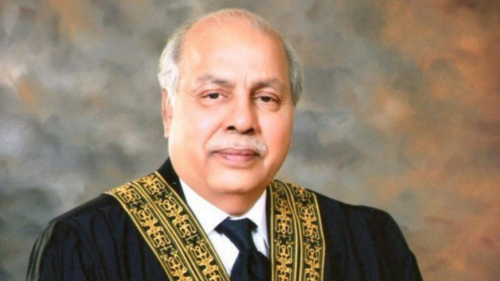
ISLAMABAD: Chief Justice of Pakistan Gulzar Ahmed on Wednesday directed the high courts to take necessary steps for timely disposal of cases to eliminate their backlog.
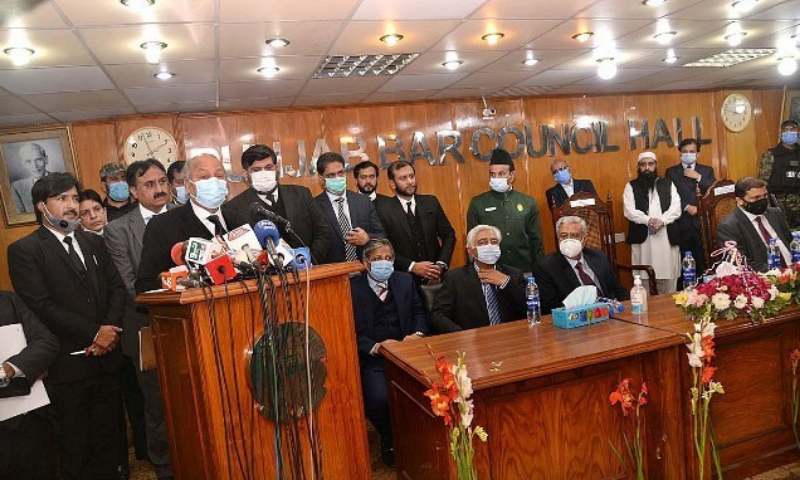
He issued the directive during a meeting of the National Judicial (Policy Making) Committee (NJPMC) at the Supreme Court building.
Currently the country’s superior judiciary is facing a backlog of 377,380 cases whereas the district judiciary is burdened with 1.8 million cases.
During the meeting, which was attended by the chief justices of the high courts and judges of the Federal Shariat Court, the chief justice of Pakistan observed that the Covid-19 pandemic had affected all spheres of life, but the judiciary took preventive measures for safeguarding judges, lawyers and litigants.
Proposes placement of special courts under administrative control of high courts
During the pandemic mostly important matters were heard, keeping in view the potential health hazards faced by judges, lawyers, litigants and witnesses and a majority of the cases decided were instituted from Jan 1 to Nov 30, he said.
The chief justice said that the preventive measures against the spread of coronavirus would continue to be adopted.
On filling vacant posts at all levels of the judiciary, including the special courts, the chief justice said that efforts should be made for placing the special courts under administrative control of the high courts.
Justice Mushir Alam, senior puisne judge of the Supreme Court, told the committee that as per NJPMC directives, Law and Justice Commission of Pakistan (LJCP) secretariat had prepared PC-1 for establishment of national judicial automation unit in consultation with relevant stakeholders.
Moreover, the law ministry has promised to cooperate in the finalisation of PC-l of the project.
The committee emphasised that living conditions in jails, including health and hygiene facilities for prisoners, must be improved and tests for infectious diseases must be carried out at the time of admission of prisoners to jails and then on periodic basis.
LJCP/NJPMC Secretary Dr Raheem Awan briefed the committee about the construction of Islamabad model jail. It was informed that the Executive Committee of the National Economic Council, in a meeting on July 20, 2016, had approved PC-1 for construction of the model jail at a cost of Rs3.9 billion and Rs1.4bn had been utilised so far.
The interior ministry communicated a decision of the federal cabinet that if the judiciary gave the go-ahead for the construction of Islamabad model jail then the area covered by the existing structure (about 20 acres) would be utilised for the same, otherwise the structure would be demolished and the model jail may be relocated to another site outside the city.
The committee was told that the construction of Islamabad model jail was initiated on the directive of the Supreme Court and 90 acres of land was allotted for it.
To observe progress in the work, it was decided that the chief justice would visit the site of the model jail with the chief justice of the Islamabad High Court.
The committee was told that as per NJPMC directive, for capacity building to enforce child justice in Pakistan, 188 stakeholders, including judges and prosecutors, had been trained at the judicial academies in different parts of the country and currently seven child courts were operational.
The committee resolved that since women and juveniles were vulnerable sections of society, therefore, their cases must be decided within two months.
Published in Dawn, December 24th, 2020