Scientists hail arrival of asteroid dust


 10
10


TOKYO: Officials of Japan’s space agency on Sunday hailed the arrival of rare asteroid samples on Earth after they were collected by space probe Hayabusa-2 during an unprecedented mission.
In a streak of light across the night sky, a capsule containing the precious specimens taken from a distant asteroid arrived on Earth after being dropped off by the probe.
Scientists hope the samples, which are expected to amount to no more than 0.1 grams of material, could help shed light on the origin of life and the formation of the universe.
“After six years of space travel, the box of treasures was able to land in Australia’s Woomera this morning,” Databus-2 project manager Yuichi Tsuda told a press conference.
The capsule carrying samples entered the atmosphere just before 2:30am Japan time, creating a shooting-star-like fireball as it entered Earth’s atmosphere en route to the landing site Down Under.
A few hours later, the Japan Aerospace Exploration Agency (JAXA) confirmed the samples had been recovered, with help from beacons emitted by the capsule as it plummeted to Earth after separating from Hayabusa-2 on Saturday, while the fridge-sized probe was about 220,000 kilometres away.
“The capsule landed in perfect form, and the probe is moving on to another mission,” Tsuda said.
The capsule, recovered in the southern Australian desert, will now be in the hands of scientists performing initial analysis including checking for any gas emissions. It will then be sent to Japan.
Megan Clark, chief of the Australian Space Agency, congratulated the “wonderful achievement”.
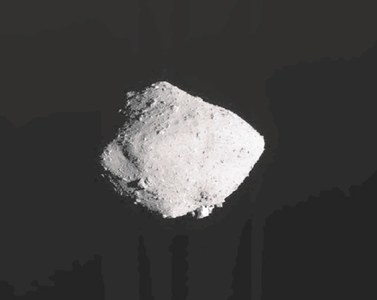
The samples were collected by Hayabusa-2, which was launched in 2014, from the asteroid Ryugu, about 300 million kilometres from Earth.
The material is believed to be unchanged since the time the universe was formed.
Larger celestial bodies like Earth went through radical changes including heating and solidifying, changing the composition of the materials on their surface and below.
But “when it comes to smaller planets or smaller asteroids, these substances were not melted, and therefore it is believed that substances from 4.6 billion years ago are still there,” Hayabusa-2 mission manager Makoto Yoshikawa told reporters before the capsule arrived.
Published in Dawn, December 7th, 2020