Climate ministry secures Rs2.48bn Public Sector Development Programme allocation for green projects

ISLAMABAD: The Ministry of Climate Change and Environmental Coordination (MoCC&EC) has secured an allocation of Rs2.478 billion under the Public Sector Development Programme (PSDP) for the fiscal year 2026-27 beginning July 1.
The allocation will support four ongoing projects aimed at ecological restoration, green skills development, urban climate resilience and strengthening institutional capacity for climate action, according to a statement issued by the ministry.
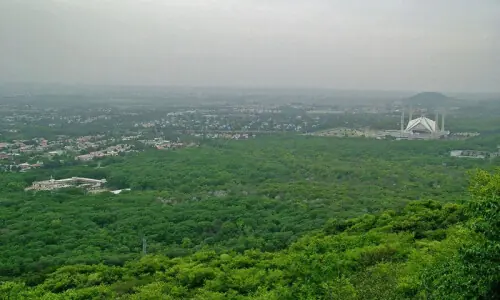
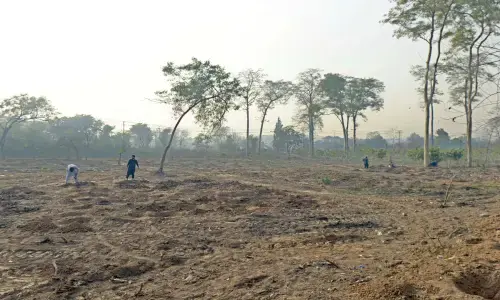
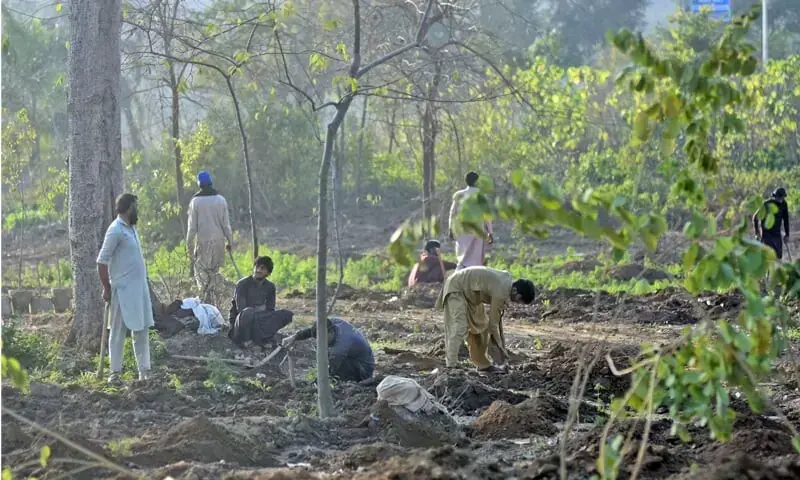
The lion’s share of the allocation, Rs2.335bn, has been earmarked for the flagship Up-scaling of Green Pakistan Programme, which focuses on large-scale afforestation, biodiversity conservation, carbon sequestration and the restoration of natural ecosystems.
The allocation also underscores the government’s emphasis on strengthening Pakistan’s climate resilience and integrating environmental sustainability into the country’s development agenda. Officials said the PSDP allocations reflected the prime minister’s resolve to equip the country to cope with escalating climate threats, including glacial melting, glacial lake outburst floods (GLOFs), water scarcity, deforestation, heatwaves, forest fires and land degradation, which have become increasingly frequent and severe in recent years.
MoCC&EC spokesperson and climate policy advocacy specialist Mohammad Saleem Shaikh said the prime minister had consistently advocated climate action as a national priority and ensured that environmental concerns were embedded in development planning.
“Under the prime minister, climate resilience has become a central pillar of Pakistan’s development strategy. These investments are aimed at protecting people, restoring ecosystems and ensuring that the country is better prepared to confront emerging threats posed by glacial retreat, GLOFs, water stress, heat extremes, forest fires and environmental degradation,” he said.
He said the budget reflected the government’s growing commitment to climate resilience and nature-based solutions at a time when Pakistan remained among the countries most vulnerable to climate-induced disasters.
“The PSDP allocation for FY2026-27 demonstrates that climate action is no longer a peripheral issue but a national development priority. These investments are designed to strengthen ecosystems, create green economic opportunities and protect communities against the growing impacts of climate change,” Mr Shaikh told Dawn.
He said the Green Pakistan Programme would continue to serve as the country’s flagship ecological restoration initiative, helping enhance forest cover, conserve biodiversity and unlock opportunities for carbon financing.
“Restoring natural capital is an investment in Pakistan’s future. Healthy forests and ecosystems not only absorb carbon emissions but also support livelihoods, water security and disaster resilience,” he said.
According to ministry documents, three new components are being incorporated into the Green Pakistan Programme, including the establishment of a Wildlife Rescue Centre and Urban Forestry Unit in Margalla Hills National Park, the creation of a National Botanical Garden at Bani Gala, and the development of a Pollution Load Assessment Network to monitor air and water pollution in Islamabad.
An allocation of Rs51.6 million has also been made for the “Green Skills for Sustainable Development” initiative aimed at equipping young people with the skills needed for a low-carbon economy and promoting green entrepreneurship.
Saleem Shaikh said investment in youth and innovation would help transform climate challenges into economic opportunities.
“Green jobs and green entrepreneurship represent the future. By empowering young people with climate-relevant skills, Pakistan can simultaneously tackle unemployment and build a resilient, sustainable economy,” he said.
The ministry has also been allocated Rs50 million for preparing a National Urban Strategy and guidelines to minimise the impacts of urban flooding, droughts and climate-related disasters. The initiative is being implemented with support from the UNFCCC Adaptation Fund and UN-Habitat.
Describing urban resilience as an urgent priority, the spokesperson said Pakistan’s rapidly expanding cities required climate-smart planning to withstand increasingly frequent extreme weather events.
“Recent years have shown that climate risks are intensifying. Through improved urban planning and disaster-sensitive spatial development, we aim to make cities safer, more resilient and better prepared for future shocks,” he said.
An additional Rs40.66 million has been allocated for strengthening the ministry’s technical capacity in areas including climate finance, marine biodiversity, water, sanitation and hazardous waste management.
The official said enhancing institutional capacity would enable Pakistan to better access international climate finance and effectively fulfil its environmental commitments.
“Climate governance today demands robust institutions, sound science and evidence-based policymaking. Strengthening these capacities is essential for delivering meaningful climate action and safeguarding the country’s development gains,” he added.
Officials said two projects, including water quality monitoring and the Pakistan Biosafety Clearing House, would conclude on June 30 after achieving major milestones in strengthening environmental governance and public health systems.
The ministry’s PSDP portfolio for FY2026-27 is expected to contribute to Pakistan’s climate adaptation goals while supporting sustainable development and enhancing resilience against floods, droughts and other climate-related threats.
Published in Dawn, June 15th, 2026