Republicans scold social media CEOs at senate hearing, warn of restrictions

WASHINGTON: With next week’s US presidential election looming, the chief executives of Twitter, Facebook and Google were scolded by Republicans at a Senate hearing on Wednesday for alleged anti-conservative bias in the companies’ social media platforms and received a warning of coming restrictions from Congress.
Lawmakers of both parties are assessing the companies’ tremendous power to disseminate speech and ideas, and are looking to challenge their long-enjoyed bedrock legal protections for online speech.
The Trump administration, seizing on accusations of bias against conservative views, has asked Congress to strip some of the protections that have generally shielded the tech companies from legal responsibility for what people post on their platforms.
The time has come for that free pass to end, said Senator Roger Wicker, chairman of the upper house’s commerce committee. Wicker, a Republican from Mississippi, said the laws governing online speech must be updated because the openness and freedom of the internet were under attack.
He spoke at the opening of the hearing as Twitter CEO Jack Dorsey, Facebook’s Mark Zuckerberg and Google’s Sundar Pichai waited to testify via video.
Wicker cited the move this month by Facebook and Twitter to limit dissemination of an unverified political story from the conservative-leaning New York Post about Democratic presidential nominee Joe Biden. The story, which was not confirmed by other publications, cited unverified emails from Biden’s son Hunter that were reportedly disclosed by Trump allies.
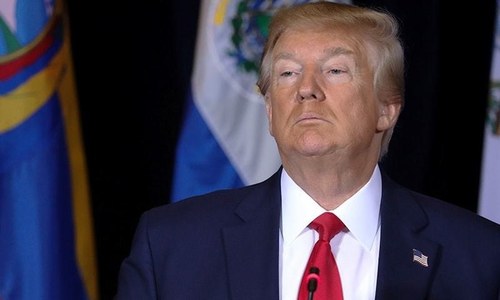
Republicans, led by President Donald Trump, have accused the social media platforms of deliberately suppressing conservative, religious and anti-abortion views.
In their prepared testimony, Dorsey, Zuckerberg and Pichai addressed the proposals for changes to a provision of a 1996 law that has served as the foundation for unfettered speech on the internet. Critics in both parties say that immunity under Section 230 enables the social media companies to abdicate their responsibility to impartially moderate content.
Zuckerberg acknowledged that Congress should update the law to make sure its working as intended.
Dorsey and Pichai urged caution in making any changes. Undermining Section 230 will result in far more removal of online speech and impose severe limitations on our collective ability to address harmful content and protect people online, Dorsey said.
Pichai appealed to lawmakers “to be very thoughtful about any changes to Section 230 and to be very aware of the consequences” those changes might have on businesses and consumers.
The session lacked the in-person drama of star-witness proceedings before the coronavirus. The hearing room was nearly empty except for Wicker and a few colleagues, but their questioning was sharp as tempers flared among members.
“Twitter’s conduct has by far been the most egregious,” Sen Ted Cruz told Dorsey. Cruz cited Twitter’s limitations on the newspaper story as part of a pattern of censorship and silencing Americans with whom Twitter disagrees.
Sen Brian Schatz, a Democrat, went after Republicans, saying the hearing was a sham. “This is bullying,” Schatz told the CEOs. “Do not let US senators bully you into carrying the water” for politicians seeking to discredit their opponents.
With their questions, Schatz said, the Republicans are “trying to bully the heads of private companies into making a hit job” on political leaders.
Trump earlier this year signed an executive order challenging the protections from lawsuits under the 1996 telecommunications law.
Assistant Attorney General Stephen Boyd told congressional leaders in a letter on Tuesday that recent events have made the changes more urgent, and said the restrictions by Twitter and Facebook related to the newspaper story was “quite concerning’.
Ajit Pai, chairman of the Federal Communications Commission, an independent agency, recently announced plans to re-examine the legal protections an about-face from the agency’s previous position.
Misinformation label
Social media giants are also under heavy scrutiny for their efforts to police misinformation about the election. Twitter and Facebook have imposed a misinformation label on content from the president, who has about 80 million followers.
Trump has raised the prospect of mass fraud in the vote-by-mail process.
Starting on Tuesday, Facebook didn’t accept any new political advertising. Previously booked political ads will be able to run until the polls close on Nov 3, when all political advertising will temporarily be banned. Google, which owns YouTube, also is halting political ads after the polls close. Twitter banned all political ads last year.
Published in Dawn, October 29th, 2020