ISLAMABAD: The Council of Islamic Ideology (CII) stated on Wednesday that there are no constitutional or Sharia constraints on the construction of a temple in Islamabad or any other part of the country.
The CII meeting, which was led by chairman Dr Qibla Ayaz, made its decision on the basis of the Constitution and the Liaquat-Nehru Agreement of 1950, which led to the establishment of the Evacuee Trust Property Board (ETPB) in Pakistan and a similar entity in India.
The CII has also allowed the government to hand over an ancient Hindu temple and adjoining Dharamshala (community centre) in Saidpur village to Islamabad’s Hindu community.
“In view of current population in Islamabad the ancient temple and the adjoining Dharamshala at Saidpur village be opened to the Hindus and they should be facilitated to reach there to perform religious services as per their beliefs,” the CII said.
The decision, signed by 14 CII members, added that Hindus, like all other religious groups in the country, have the constitutional right to a place for last rites according to their faith.
Council does not support provision of govt funds for construction of temple but recommends solutions to funding issue
“Under this Right the Hindu community in Islamabad can have a suitable place for cremation of their dead and perform last rites of the deceased according to religious instructions,” the council said.
An application was referred to the CII by the Ministry of Religious Affairs on July 6, seeking its opinion on the allotment of a four kanal plot in H-9/2 to the Hindu community for a crematorium, community centre and temple.
The ministry had also sought the CII’s advice on the allocation of Rs100 million by the prime minister for the construction of the crematorium and temple.
Some clerics, mainly those affiliated with Lal Masjid, Jamiat Ulema-i-Islam-Fazl and Markazi Jamiat Ahle Hadis, had objected and claimed that a government grant for a temple was un-Islamic.
An application was also filed in the Islamabad High Court by an individual against the construction of the temple and crematorium. The court deferred the matter and connected it to the CII’s decision.
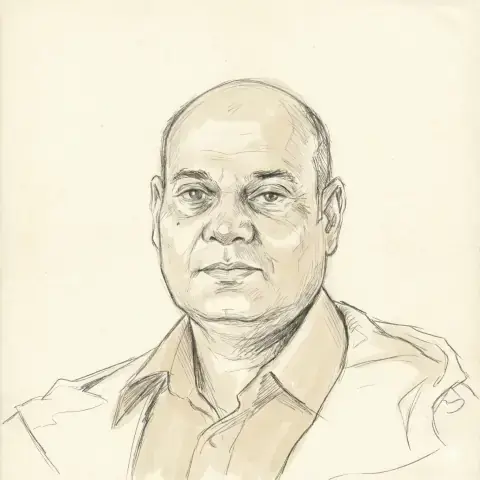
After the council meeting, Dr Ayaz said a conclusion was reached after the council heard the perspectives of various applications, mostly by clerics, and of the Hindu community.
“The decision has been made in light of various provisions of Sharia,” he told the press.
Dr Ayaz said the construction of the temple was permissible and a constitutional right, adding that there is no restriction in Sharia on the construction of community centres by non-Muslims for collective activities such as weddings and the celebration of religious festivals.
However, the council said it did not support the provision of government funds for the construction of the temple because there was no tradition in general for the government to provide funds for places of worship owned by private parties.
But the CII also suggested alternatives to resolve the funding issue, including amending the ETPB act to meet the financial needs for the execution of religious activities or creating a fund for non-Muslim communities.
It said that the ETPB was established in light of the Nehru-Liaquat Agreement. A similar board in India is responsible for looking after mosques and facilitating pilgrimages to various shrines of Muslim saints.
In Pakistan, the ETPB is responsible for taking care of Hindu temples and Gurdwaras and providing facilities to visitors and pilgrims at these places of worship.
The CII noted that the ETPB’s source of income is from renting abandoned properties belonging to Hindu and Sikh communities prior to partition.
The council’s other solution was to create a block fund for non-Muslims, as they are citizens of Pakistan and the state is responsible for ensuring their welfare and prosperity.
The government may allocate funding separately and hand it over to non-Muslim communities, as there is no Sharia requirement on the utilisation of those funds by the relevant community.
PTI MNA Lal Chand Malhi welcomed the council’s decision, saying it proved that the state guarantees rights to religious minorities.
“After the CII decision the Capital Development Authority should issue a no-objection certificate to the Hindu Panchayat Islamabad to erect a boundary wall around the plot in H-9,” Mr Malhi said.
Published in Dawn, October 29th, 2020