Dams planned under CPEC may harm Indus river dolphin: WWF-P
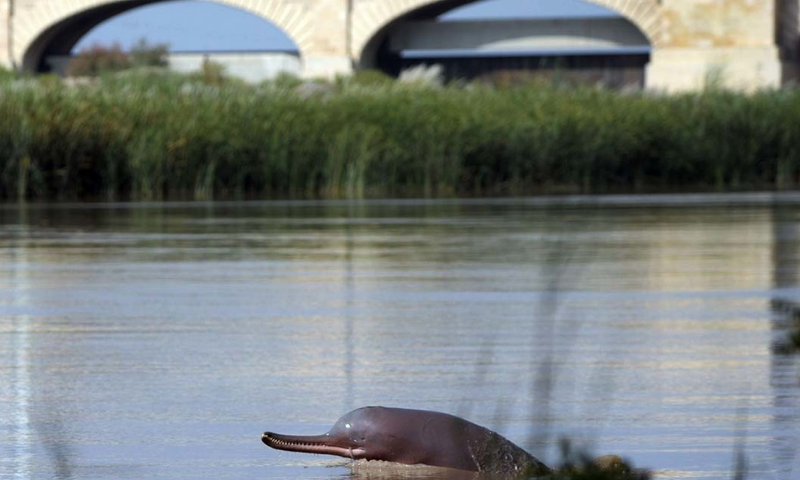


KARACHI: The World Wide Fund for Nature-Pakistan (WWF-P) in a statement released on the World River Dolphin Day -- observed internationally on October 24 -- has expressed concern over the dams planned under the Indus Cascade Project, a part of the China-Pakistan Economic Corridor (CPEC), saying that the dams might harm the endangered Indus river dolphin.
“WWF-Pakistan is of the view that dams alter river ecology, change sediment flow which impacts hydrology and flows of a river posing threats to prey species and their breeding grounds, damaging habitat of river dolphins.
“Moreover, the Inland Waterway Project planned to develop the Indus River for transportation of goods through vessels can also be detrimental for the Indus dolphin population,” says the statement.
Commenting on the population range and threats to the Indus river dolphin, Dr Uzma Khan, Asia Coordinator, River Dolphins River Initiative of WWF, said the Indus dolphin was found in all major rivers of Pakistan including Sutlej, Beas, Ravi and Jhelum. However, infrastructure development wiped out the population in these rivers and now it was only found in the Indus river with only six to eight dolphins existing in the Beas River section in India.
She shared that a decline of around 80 per cent had been witnessed in the habitat range of the Indus River dolphin due to barrages.
She was of the view that canal stranding was a regular feature and on an average eight dolphins become trapped in canals every year, which were then physically translocated back to the mainstream of the Indus river.
“Apart from habitat fragmentation, unsustainable and illegal fishing practices pose a threat to the population of the Indus river dolphin,” she added.
According to last survey conducted in 2017, a total of 1,816 dolphins were reported present in the Indus River. The largest population of the dolphin, 1,075 individuals, is concentrated along a 200km patch between Guddu and Sukkur barrages, which was declared the Indus Dolphin Reserve in 1974.
Earlier, three surveys were conducted in 2001, 2006 and 2011 and they reported presence of 965, 1,410 and 1,452 dolphins, respectively.
WWF-Pakistan states that as a result of community engagement in dolphin conservation initiatives, partnerships and awareness campaigns, dolphin numbers have almost doubled in the last two decades.
The organisation plans to monitor the migration pattern, movement and behaviour of the species in collaboration with the wildlife departments of Sindh and Punjab.
This would be done in the near future by placing satellite tags on three dolphins in the near future.
Published in Dawn, October 26th, 2020