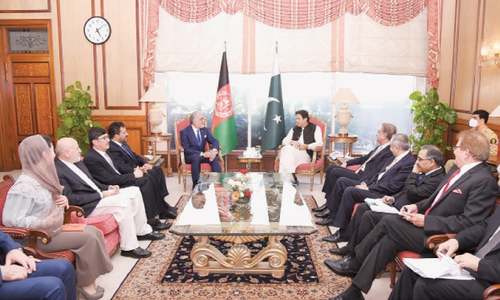
Negotiators near compromise over interpretation of Islam: Abdullah


ISLAMABAD: The Afghan government and Taliban negotiators are nearing a compromise on a key sticking point that has stalled peace talks in Doha, Abdullah Abdullah, chairman of Afghanistan’s High Council for National Reconciliation that is overseeing Kabul’s peace push, said in an interview. After several small-group meetings, the issue had been resolved “to a large extent”, he added.
Talks started in the Qatari capital on Sept 12, but an optimistic beginning was marred by ongoing violence and discussions got bogged down by disagreements over which interpretation of Islam should be used to frame laws in a post-conflict Afghanistan.
The Taliban, who are Sunni hardliners, had insisted on strict adherence to the Hanafi school of Sunni Islamic jurisprudence, but government negotiators worried this could be used to discriminate against the predominantly Shia Hazara community and other religious minorities.
Both sides have provisionally agreed “to recognise the principal issue of Hanafi’s role without any discrimination to Shia communities or minorities, so ... the compromise is around that,” Mr Abdullah said.
Resolution of the issue means one less obstacle as negotiators try to draw up an agenda for talks, which could take years to complete.
Another stumbling block has emerged: the extent to which the Taliban recognise the legitimacy of the Kabul government under a future deal.
The insurgents have always insisted President Ashraf Ghani’s government is a US-enabled “puppet” regime. In the deal the Taliban cut with Washington in February, they did not have to recognise Kabul.
Similarly, the Taliban now want any future peace deal to exclude overt references to the government and instead to frame the agreement as some sort of “intra-Afghan” accord.
Without providing details, Mr Abdullah said the two sides appeared to have made progress on the issue.
He said after a slow start, the negotiating teams were now “getting along quite well and this latest impasse, hopefully we will overcome it soon.”
Published in Dawn, October 1st, 2020