Second virus wave forces NZ PM to put off election

WELLINGTON: New Zealand on Monday postponed its election to focus on fighting a second wave of the coronavirus as Europe tightened restrictions to curb fresh outbreaks of the disease.
Japan has become the latest country to reveal the huge financial fallout from the global pandemic reporting that its economy — like many others — had endured a historic contraction.
With more than 21.5 million cases worldwide, a second wave of infections is threatening further disruption as nations from Europe to Asia look to reimpose restrictions. The postponement of New Zealand’s election to October 17 came after the shock discovery of Covid-19 in Auckland last week, ending the nation’s 102-day streak without community transmission.
“This decision gives all parties time over the next nine weeks to campaign and the Electoral Commission enough time to ensure an election can go ahead,” Prime Minister Jacinda Ardern said. She said the return of the virus — which sent New Zealand’s largest city into lockdown — had rattled Kiwis and could have discouraged some from voting in a September election.
In South Korea, another country that had brought its initial outbreak largely under control, thousands of Protestant Church members were asked to quarantine as authorities battled outbreaks linked to religious groups.
The largest cluster is centred on the Sarang Jeil Church in Seoul, headed by pastor Jun Kwang-hun who faces allegations of deliberately hindering efforts to contain the virus.
In Europe, where strict lockdowns appeared to bring the virus largely under control earlier this year, several countries have reported a surge in new infections.
Growing numbers of cases have forced governments to weigh renewed health restrictions against public frustration and the need to spur economies already battered by a first round of lockdowns.
Regions across Spain have begun to enforce 11 measures the government unveiled on Friday to curb one of the fastest virus growth rates in Europe.
They include the closure of all discos, night clubs and dance halls while restaurants and bars are required to close by 1am, with no new guests allowed in from midnight.
Italy — once the global epicentre of the coronavirus — has also ordered the three-week closure of all dance venues after a pick-up in infections over the weekend blamed in part on young partygoers.
Wearing a face mask is also mandatory in public areas from 6pm to 6am.
“The contagion is on the rise but we’re dancing,” proclaimed the Corriere Della Sera newspaper, which slammed Sardinia’s clubs as being “joyful contagion machines”.
Britain has also removed France, the Netherlands, Malta and three other countries from its list of places exempt from self-isolation rules because of the continent’s second virus wave.
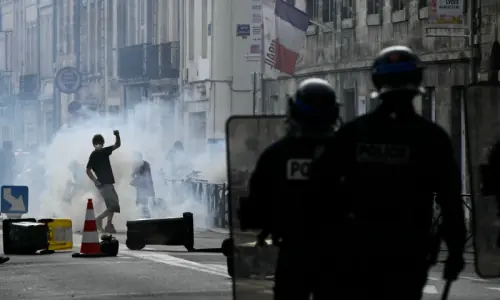
But attempts to curb the spread of the virus have been met by scepticism and protests in several parts of Europe.
“They are forcing us to use a mask, they want us to stay home practically locked up,” said Pilar Martin, 58, at a rally in Madrid that drew a variety of people, many promoting widely debunked conspiracy theories about the coronavirus being a hoax.
European nations have already reported disastrous damage to their economies in the second quarter of the year. On Monday, Japan also reported its economy shrank a record 7.8 percent in the April-June quarter, the worst contraction in the nation’s modern history.
Published in Dawn, August 18th, 2020