BEIRUT: Lebanon’s prime minister announced the government’s resignation on Monday, saying a massive explosion that devastated Beirut last week and triggered public outrage was the result of endemic corruption.
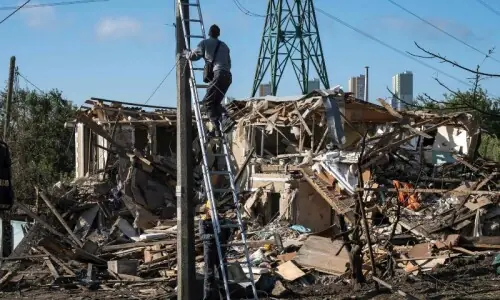
The Aug 4 detonation at a port warehouse of more than 2,000 tonnes of ammonium nitrate killed 163 people, injured more than 6,000 and destroyed swathes of the Mediterranean capital, compounding months of political and economic meltdown.
“Today we follow the will of the people in their demand to hold accountable those responsible for the disaster that has been in hiding for seven years, and their desire for real change,” Prime Minister Hassan Diab said in a speech announcing the resignation. President Michel Aoun accepted the resignation and asked Diab’s government _ formed in January with the backing of the powerful Hezbollah group and its allies _ to stay as a caretaker until a new cabinet is formed, a televised announcement said.
Ahead of Diab’s announcement, demonstrations broke out for a third day in central Beirut, with some protesters hurling rocks at security forces guarding an entrance leading to the parliament building, who responded with tear gas.
For many ordinary Lebanese, the explosion was the last straw in a protracted crisis over the collapse of the economy, corruption, waste and dysfunctional governance, and they have taken to the streets demanding root-and-branch change.
“The entire regime needs to change. It will make no difference if there is a new government,” Joe Haddad, a Beirut engineer, said. “We need quick elections.”
The system of government requires Aoun to consult parliamentary blocs on who should be the next prime minister, and he is obliged to designate the candidate with the greatest level of support among parliamentarians.
Published in Dawn, August 11th, 2020