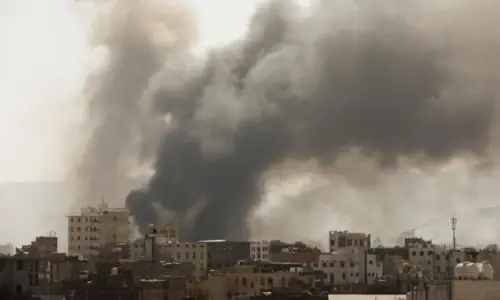
ON Wednesday, a Jamaat-i-Islami rally in Karachi, staged in solidarity with the people of India-held Kashmir — which recently marked one year since India revoked its special status — came under attack by assailants who threw hand grenades into the crowd. Nearly 40 people were injured — one person later died — in the attack, which has been claimed by the banned separatist Sindhudesh Revolutionary Army. While there have been fewer militant attacks when compared to our not-so-distant blood-soaked past, such incidents reopen old wounds and bring to life all-too-familiar fears of disharmony in the country. Karachi and other parts of the country have been the sites of ethnic and sectarian violence over the years, and one can only hope to never return to those days of perpetual turmoil and insecurity, when terrorist attacks and bomb blasts became the norm, or when bodies would be left in gunny bags in the dead of the night.
On a less frequent scale (perhaps on account of beefed-up security in some places) a string of sporadic attacks on high-profile targets have been perpetuated in recent times, many of which have targeted security personnel themselves. In June, Baloch separatists attacked the Pakistan Stock Exchange in Karachi, leaving four security personnel dead, and injuring several bystanders. And last year, the banned TTP attacked a DIG police compound in Loralai, killing a number of policemen. In May 2019, a bomb blast carried out by a TTP splinter group outside the Data Darbar shrine in Lahore killed 13 people, including several security personnel. Following this, another attack by Baloch separatists on the Gwadar Pearl Continental Hotel in Quetta left five people dead. Then, in July 2019, militants on motorbike attacked a security checkpoint in Dera Ismail Khan, before a suicide blast was carried out inside a hospital, killing several people, including six security personnel, and injuring many. With Muharram around the corner, the government must ensure greater security for the crowds that are expected to gather in observance of religious traditions.
Published in Dawn, August 7th, 2020