Interview: 'India wants to quell domestic dissent after China clash by diverting attention'


 44
44


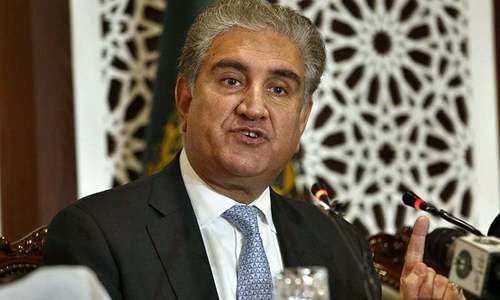
Foreign Minister Shah Mahmood Qureshi, in an interview with Reuters, denounced India's announcement made on Tuesday that it would expel half the staff in Pakistan's embassy in New Delhi over spying, saying India was trying to divert attention at home.
“The accusations were baseless,” he said.
Pakistan has accused India of trying to distract the attention of its people by expelling Pakistani diplomats after Indian forces got a “battering” at the hands of Chinese troops in a clash on their disputed Himalayan border.
“They have no answers for the battering they got in Ladakh, so to quell the domestic dissent they want to refocus,” he said.
India's foreign ministry did not immediately respond to request for comment.
Qureshi said he was concerned that India could try to get Pakistan involved in the regional tensions with a “false flag operation” — an incident staged to provide a pretext for action. But he added that Pakistan backed the position of its ally China over Ladakh and he had recently had a call with China's top diplomat, Wang Yi, who had expressed appreciation for that position.
The foreign minister expressed fear that any Indian “misadventure” in Pakistan's territory would prompt Islamabad to respond with force.
He further said that Pakistan is concerned about the tension after the June 15 clash in the Ladakh region — in which 20 Indian soldiers were killed — in particular about the possibility Pakistan could get dragged in.
“Things have deteriorated, things are very delicate,” Qureshi told Reuters late on Thursday.
The three nuclear-armed neighbours all have historic disputes over high-altitude border demarcation in the Himalayas.
For years, a confrontation between India and Pakistan has been seen as the most dangerous of the disputes but the violence between Indian and Chinese forces has renewed alarm about theirs too.