Indian army says 20 of its troops killed in border clash with China
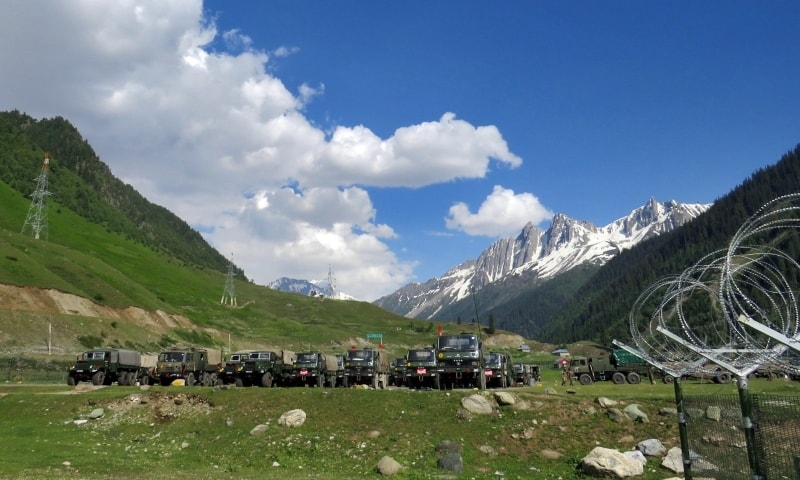
At least 20 Indian soldiers have been killed in a "violent faceoff" with Chinese forces on the disputed Himalayan border, the Indian army said late on Tuesday, the deadliest clash between the nuclear-armed neighbours in decades.
India had earlier said three of its troops were killed, but in a statement issued later in the day the army added that 17 more “who were critically injured (on Monday) in the line of duty at the standoff location and exposed to sub-zero temperatures in the high altitude terrain have succumbed to their injuries, taking the total that were killed in action to 20”.
India and China have been locked in a standoff in the western Himalayas for weeks, though there had been no casualties on either side.
The latest incident took place in the Galwan Valley in the mountainous region of Ladakh, the Indian army had said in a statement earlier. It said there were "casualties on both sides" in the incident which took place on Monday, although Beijing made no mention of any — while laying the blame squarely on Delhi.
Senior military officials from both sides were meeting to defuse the situation, it said.
An Indian army officer in the region told AFP that there had been no shooting in the incident. "It was violent hand-to-hand scuffles," the officer said on condition of anonymity.
'Attacking Chinese personel'
Beijing on Tuesday confirmed a clash took place, but made no mention of casualties. It accused Indian soldiers of crossing into Chinese territory and "attacking Chinese personnel".
Foreign ministry spokesman Zhao Lijian said Indian troops "crossed the border line twice ... provoking and attacking Chinese personnel, resulting in serious physical confrontation between border forces on the two sides".
"We again solemnly request that India follows the relevant attitude and restrains its frontline troops," he said.
The Asian giants have rival claims to vast swathes of territory along their 3,500 kilometers Himalayan border, but the disputes have remained largely peaceful since a border war in 1962.
India’s main stock indexes, gave up earlier gains after the news, and were last up about 0.4 per cent each at 07:40 GMT, while the rupee weakened to 76.04 to the dollar.
Tensions along the China-India border high in the Himalayas have flared again in recent weeks, leading defence experts in New Delhi to fear that the jostling could turn into an unintended full-blown military action.
Indian officials say the latest row began in early May, when Chinese soldiers entered the disputed territory of Ladakh at three different points, erecting tents and guard posts. They said the Chinese soldiers ignored repeated verbal warnings to depart, triggering shouting matches, stone-throwing and fistfights. China has sought to downplay the confrontation while providing little information.
Observers, however, say that the face-off was triggered by India’s construction of roads and air strips in the region.
'India is responsible for the conflict': FM Qureshi
Reacting to the violent faceoff between India and China, Foreign Minister Shah Mahmood Qureshi said that Pakistan was observing the developments carefully but that it held India responsible for the conflict.
"India should have never built roads and airstrips in a disputed area," he said.
He was speaking to anchorperson Shahzeb Khanzada on Geo News.
"This isn't a new dispute between the two countries. If you remember, they [India and China] even fought a war over this in 1962," Qureshi said.
"First, I heard that Indian soldiers were physically beaten and now I'm hearing that 20 soldiers have been killed and that number could rise," he added.
The foreign minister said that India does not have good relations with any of its neighbours.
"India has issues with us, China, Nepal and even Bangladesh and Sri Lanka. Bangladesh used to be a good friend of theirs but after the Citizenship Amendment Act [debacle], relations between the two countries have become tense," he said.