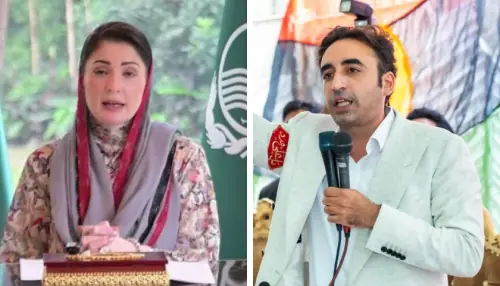
WITH a gesture that has become something of a rarity in our polarised national discourse, PPP chairman Bilawal Bhutto-Zardari has announced a ‘no criticism policy’ with regard to Prime Minister Imran Khan and his government. Urging increased coordination and unity between the centre and the provinces, Mr Bhutto-Zardari said, “We should not waste our energies over criticism, the blame game and political point-scoring. It’s not the time to criticise the prime minister and I would not blame him or anyone. Instead, I should hope that he and every single citizen of Pakistan can win this fight.” The revelation came as the federal and provincial governments battle the unprecedented challenges unleashed by the fast-spreading Covid-19, which has the potential to devastate global healthcare infrastructure and economies.
Given how toxic political rivalries can be in Pakistan, the ‘no criticism policy’ is a welcome and sensible step at a time when the country — and in fact the world — needs extraordinary leadership. This is a pandemic that takes no prisoners. In multiple countries, the effects of the outbreak have put immense pressure on public health systems and emergency services. Economic growth, too, has been severely affected, as lockdowns prevent regular business and workers are kept in their homes. In Pakistan, with nearly 500 confirmed cases and at least three reported deaths, Covid-19 is steadily testing the resources and capacity of a system which is far less sophisticated than that found in developed countries. Still, even with Pakistan’s economic and infrastructural limitations, the response of the provincial governments, Sindh and Khyber Pakhtunkhwa in particular, has been impressive. Sindh has recorded the highest numbers of confirmed cases in the country, and its political leadership has done well to learn from other countries and enforce closure where possible. On social media, both KP and Sindh spokespersons are active in messaging and engagement and are visible in fighting misinformation. These are timely steps in a battle that is colossal and multipronged, but one that can perhaps be won if the political leadership is on one page and sound decisions are taken.
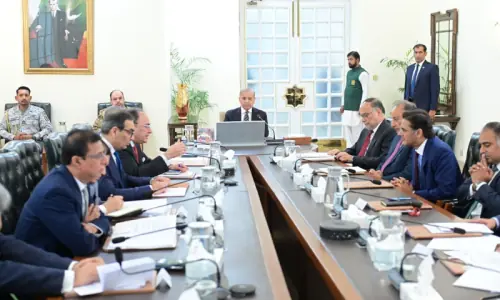
As reports of shortage of protective gear for medical staff around the country increase with more and more people testing positive, the centre and provinces must sit together and decide how to overcome this challenge. It is imperative to procure testing kits and protective gear, and the NDMA chairman yesterday gave details on the availability of these. In the case that many doctors are infected, the government should prepare a contingency plan as other countries have done by calling on retired medical officers to return to duty. Circumstances demand working in tandem towards making resources available and containing the spread. As the world grapples with frightening new realities in the war against Covid-19, it would serve humanity well if our leaders demonstrate solidarity and work together.
Published in Dawn, March 21st, 2020