3
3

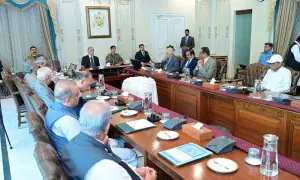
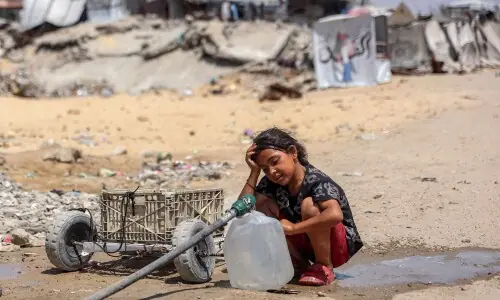
AT a recent gathering at Parliament House, speakers highlighted Pakistan’s challenges with regard to sanitation — particularly the lack of toilets, clean hygiene practices and waste management which gives rise to a host of illnesses and infections in the population. Due to the absence of even basic infrastructure, open defecation is not an uncommon sight in cities, towns and villages across Pakistan, often close to waterways; this poses a risk not only to public health, but also to the environment. Additionally, poorly constructed sewerage lines can lead to human waste seeping into irrigation channels, which contaminates the water used for drinking and growing crops. Water-borne ailments such as diarrhoea threaten the lives of mainly young children. According to Unicef, over 22,000 children around the world die each year from diarrhoea, and it remains one of the leading causes of death among infants and children in Pakistan. This country also has one of the highest rates of stunting in the world, which is partly attributed to the mismanagement of waste disposal and the lack of awareness of safe hygiene practices within households. Then there is the widespread issue of flies that collect over open sources of waste and transmit the filth to food items, leading to cases of cholera in the population.
According to data shared by the Salman Sufi Foundation — which plans to launch Saaf Bath, a much-needed initiative to provide clean public toilet facilities to the people — approximately 79pc Pakistanis lack proper toilet facilities. The situation is worse for women, with over half of them not having access to proper sanitation in male-dominated societies that so easily overlook, ignore or are openly hostile to their right to exist and move about freely in public spaces. Unfortunately, the lack of toilets is a major governance oversight which has direct implications for the country’s economy. According to the SSF, nearly $2bn are flushed down the toilet each year due to this rarely talked about issue. What a waste, indeed.
Published in Dawn, February 23rd, 2020