Violence, intimidation threaten Cameroon’s elections


 1
1
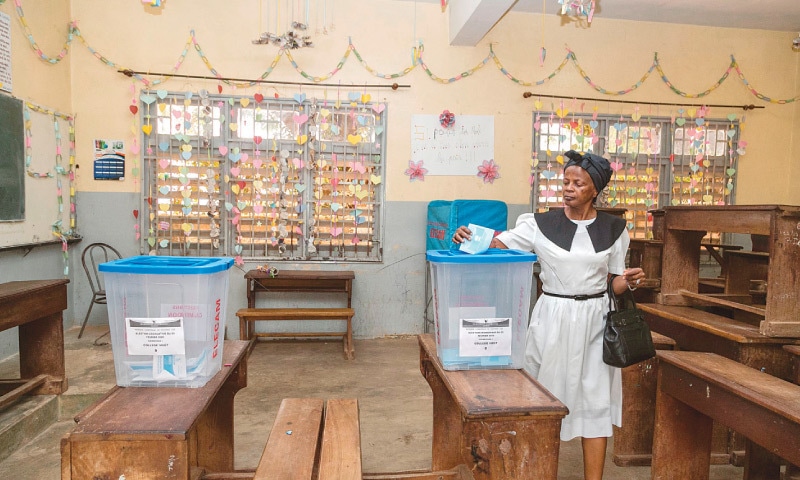

YAOUNDE: A surge of violence derailed voting in Cameroon’s English-speaking regions on Sunday because residents were too scared to cast ballots in legislative and municipal elections after militant separatists kidnapped scores of candidates and threatened violence.
At least 120 candidates were abducted in the African nation’s North West and South West regions in the past two weeks. About half of them have been released but the separatists warned voters not to participate in the elections.
Residents in the two regions said suspected separatists chopped off the fingers of at least 12 people caught with voter cards in the weeks leading up to the elections.
“They said I did not respect their injunction that no one should be found with the cards,” said Bunui Claudine, who had three of her fingers amputated, said.
Claudine, a resident of the southwestern town of Kumba, said she fled to the city of Yaounde and would not return home until after the elections “because I am not sure my security is assured”.
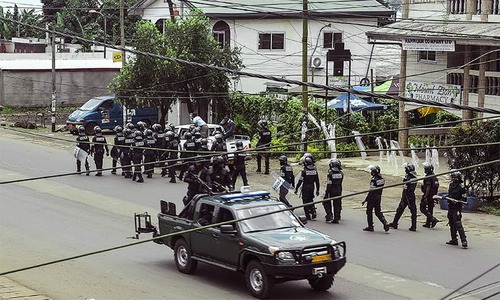
The elections were being held with a heavy military presence but few voters showed up. North West Region Governor Deben Tchoffo urged people to come out and vote.
“No one should intimidate you. You have to vote and decide who manages your future and the military is there to protect you” he said.
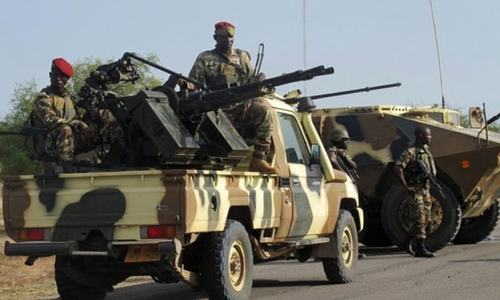
Heavily armed gangs suspected to be separatist fighters attacked military vehicles transporting elections material to the northwest town of Jakiri on Saturday night.
“God saved our lives” election worker Margeritte Oum said. “We were told that the fighters had locally made guns but we saw them heavily armed with war weapons. Our lives were saved because we were in armoured cars” she said.
Three soldiers were wounded while fighting back, the military said. Separatists previously claimed responsibility for fires at several offices of Cameroon’s election management body.
In Cameroon’s French-speaking regions, voting proceeded normally on Sunday. Voter intimidation also kept residents away from the English-speaking South West region.
“We hope that before the polls close at 6pm, some people would have come out to perform their civic duties,” regional Governor Bernard Okalia Bikai said. “They should not be scared. The military will protect them and any separatist who tries to disrupt the polls will be killed.”
During Cameroon’s 2018 presidential election, only 5pc of voters cast ballots in the North West region and 16pc in the South West region because of violence.
Unrest broke out in Cameroon’s English-speaking regions in 2016, when teachers and lawyers protested the dominance of the French language and French-speaking officials. Rebels took up arms a year later, demanding a separate English-speaking state.
Fighting between the separatists and Cameroons military has killed about 3,000 people, many of them villagers caught up in the conflict. Some civilians flee the ongoing clashes, saying they don’t believe the government can protect them.
Two opposition leaders called for voter boycotts of the elections. Cameroon People’s Party president Kah Walla said voting cannot go on as citizens die in the English-speaking regions. Maurice Kamto, the opposition leader who claims he won the 2018 election in which President Paul Biya easily won a seventh term, argued that the elections would not be free or fair.
Other opposition parties favoured the elections, saying that winning more seats in the national legislature would enable them to enact laws to address the country’s separatist crisis.
International Crisis Group senior analyst Arrey Elvis Ntui said it was a foregone conclusion that the ruling Cameroon People’s Democratic Movement party would win a sweeping victory in the election for members of the National Assembly.
“The risk of that outcome is it will further bias the character of state institutions towards the views of a single party and seems bound to reduce prospects for frank discussions about resolving the Anglophone conflict and other brewing crises,” Ntui said.
Amnesty International has blamed Cameroon’s military for the escalating violence. It said this week it has documented a pattern of unlawful killings by the army in the English-speaking regions since armed separatists announced on Dec 23 they would act out against Sunday’s elections.
Published in Dawn, February 10th, 2020