Three-day workshop on digitisation of rare manuscripts ends
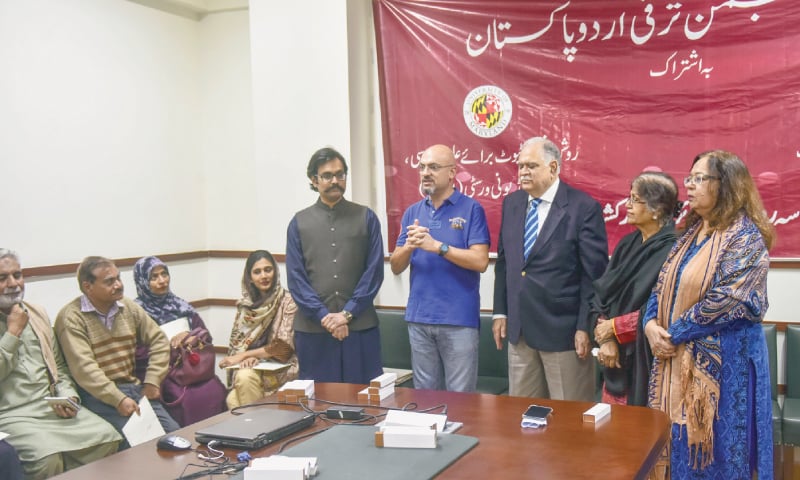
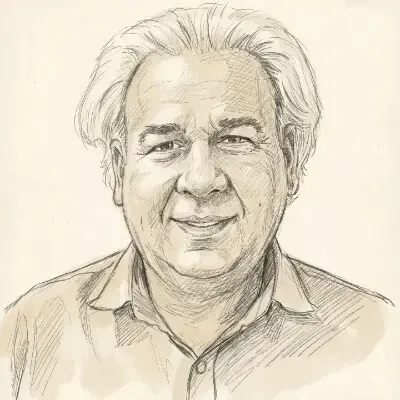
KARACHI: A three-day workshop on digitisation of rare books and manuscripts organised by the Anjuman Taraqqi-i-Urdu on its premises at Urdu Bagh in collaboration with the Hill Museum and Manuscript Library (HMML) and Roshan Institute for Persian Studies at the University of Maryland ended on Saturday afternoon. The workshop was conducted by Walid Mourad, field director of the HMML.
On the first day, a power-point presentation on the workflow in digitisation projects was made, while the second day was kept for assisted applied training and digitisation by the team.
On Saturday, which was the last day for the training session, questions were taken by Mr Mourad, who hails from Lebanon, from those who took part in the programme.
In response to a question he gave a detailed account of the importance of ‘resizing’ [of a manuscript] recommending ‘compression’ with respect to colours and pixels.
Expert says natural catastrophes have also affected manuscripts and books
In response to a query about newspapers, he said in the “newspapers you only have black, white and shades of grey. So compression would be great. And if there’s colour in the image being digitised, you can transform it into grey-scale and it will automatically become smaller.”
In terms of lighting while taking pictures, he argued, “The flash is more powerful than ambient lights. The flash light gives you more sharpness.” He also talked about what the shutter-speed and how higher or lower the aperture of the camera should be.

Earlier in the workshop, Mr Mourad remarked that the natural catastrophes that had wreaked havoc on the world had also affected manuscripts and books. In order to preserve these precious assets, the HMML and Roshan Institute first worked on their microfilming and then digitisation.
As per a handout, the Anjuman has 2,500 manuscripts which were brought to the institution from Delhi by Maulvi Abdul Haq. In 1973, they were placed in the National Museum’s archives from where last year they were brought back to the Anjuman’s [then] newly built office. Those who facilitated the collaboration with the above-mentioned two international institutions were Dr Noman Ul Haq and Dr Ali Jibran Siddiqui –– the latter accompanied Mr Mourad throughout the workshop sessions.
In the end, certificates were distributed among the participants.
Dr Fatema Hassan and the Anjuman Taraqqi-i-Urdu’s president Wajid Jawad thanked the participants and speakers, especially Mr Mourad and Dr Siddiqui.
Published in Dawn, February 9th, 2020