Exit polls predict Modi defeat as Delhi votes in key election


 86
86



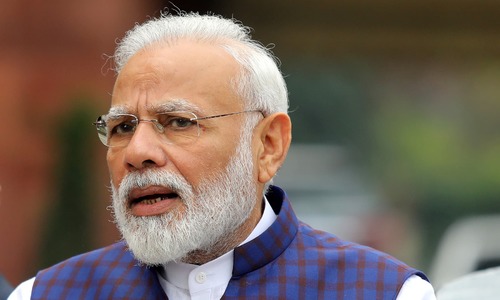
Millions in the Indian capital voted on Saturday in a key regional election, with exit polls suggesting a big defeat for right-wing Prime Minister Narendra Modi.
Modi's Hindu nationalist Bharatiya Janata Party (BJP) was a distant second behind the upstart Aam Aadmi Party, or Common Man's Party, led by former tax inspector Arvind Kejriwal, according to exit polls released after voting ended.
An average of nine exit polls showed Kejriwal's party was likely to win 52 out of 70 seats.
“We are winning by a huge margin,” tweeted Manish Sisodia, the deputy chief minister of Delhi.
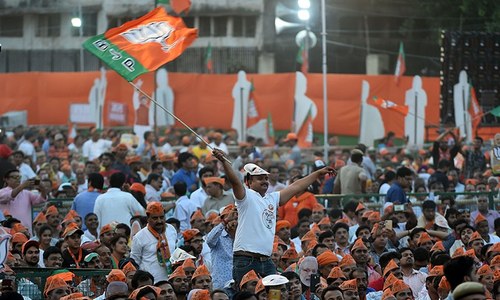
Federal Home Minister Amit Shah, who had campaigned vigorously for BJP highlighting his tough stance on national security, called a meeting of party members late Saturday.
About 57 per cent of the 14.6 million registered voters lined up in queues across New Delhi to cast ballots, India’s election commission said.
Results will be declared on Tuesday.
The polls pit Modi’s BJP against the incumbent Aam Aadmi Party, whose pro-poor policies have focused on fixing state-run schools and providing free health care and bus fares for women during the five years in power.
The Congress, a distant third party, has run a lacklustre campaign and is expected to fare poorly.
The BJP campaign reopened old wounds in the Hindu-Muslim divide and treated the election as a referendum on nearly two months of protests across India against a new citizenship law that excludes Muslims.
The law fast-tracks naturalisation for non-Muslim migrants from neighbouring Pakistan, Bangladesh and Afghanistan who are living in the country illegally. Modi’s BJP also hopes to garner Hindu votes for ending semi-autonomy of Muslim-majority occupied Kashmir last summer and turning the disputed region into two federally governed territories amid security lockdown.
Both of those actions have won him praise from supporters but little reward at the polls. BJP lost two important state elections last year.
“They (BJP) must be given a jolt. We are poor, but we are also humans. They only talk about divisions,” said Shabnam Mukhtar, a housewife at Shaheen Bagh, a working-class neighbourhood where Muslim women have staged a sit-in for two months to protest the Citizenship Amendment Act.
Ehtashamul Haque, a businessman, said the Aam Aadmi Party “only has development on their mind” in comparison to the BJP.
“People should vote for development,” he said.
On the eve of the elections, the BJP sent out messages telling people to vote for the party if they wanted an end to the Shaheen Bagh demonstration.
During the campaigning, BJP members called for violence against minority Muslims by invoking the spectre of Pakistan. Critics have called the incendiary religious appeals a tactic by BJP to divert attention from the sluggish economy, which expanded at a 4.5pc annual pace in the last quarter, its slowest rate since mid-2018.
A win would be hugely symbolic and likely to embolden Modi and his party to pursue a pro-Hindu agenda with vigour, while a loss could dent Modi’s charisma.
Modi’s BJP was voted out of power in New Delhi in 1998 by the Congress party, which had run the government for 15 years. In the 2015 elections, the Aam Admi Party won a landslide victory by capturing 67 of 70 seats. The BJP could win only three seats despite winning the 2014 national elections.