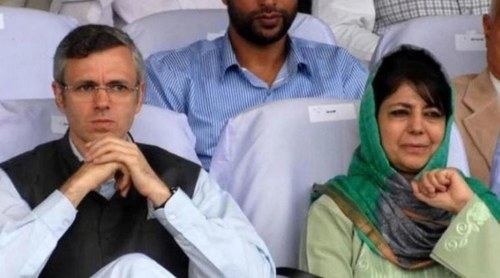
India extends detention of ex-chief ministers of occupied Kashmir under 'draconian' law


India has extended the detention of four political leaders in occupied Kashmir, including former chief ministers Omar Abdullah and Mehbooba Mufti, who have been held by authorities since August of last year after the Indian government scrapped Article 370 of the Indian constitution that granted special status to the occupied region.
The latest detention order was issued under the draconian Public Safety Act, which allows detention without charges for up to two years, officials in Srinagar told Reuters. The officials said the detained include Abdullah, Mufti and regional party leaders — Ali Mohmmad Sagar and Sartaj Madni.
Mehbooba Mufti's daughter Iltija Mufti confirmed her mother's detention under the law on Twitter.
"Slapping the draconian PSA [...] is expected from an autocratic regime that books nine-year-olds for 'seditious remarks'. Question is how much longer will we act as bystanders as they desecrate what this nation stands for?" she said.
In a subsequent tweet, she said that the two former chief ministers of occupied Kashmir weren't jailed for "provocative comments" rather "their crime was to question GOI [Government of India] for its illegal actions in J&K".
"Just because BJP [Bharatiya Janata Party] intentionally conflates itself with India doesn’t mean it is India. The message is clear. Criticise BJP at your own peril."
The occupied Kashmir politicians were originally held under a law that allowed a maximum of six months in prison and their detention was about to expire.
"The law does not allow preventive detention beyond six months. So they had to be either released or booked under PSA," said one government official on condition of anonymity.
"Several other regional leaders who have also completed six months under preventive detention are likely to be booked under PSA," a second official said.
The officials requested anonymity due to the sensitivity over security matters. Reuters sought a response from the Indian home ministry, but its spokesman was unavailable for comment.
The home ministry in a reply before the parliament on Thursday said 389 people in occupied Kashmir were already booked under PSA since August last year.
Some of those detained have been put under house arrest, while others have been taken elsewhere.
Rights group Amnesty International has described the PSA as a "lawless law".
A strict lockdown and communications blackout has been in place in occupied Kashmir since August 5, 2019, when the Indian government unilaterally stripped the region of its special status.
Last month, India's Supreme Court rebuked Prime Minister Narendra Modi's government for shutting down Internet and telecommunications in the occupied region. On January 25, limited mobile data services and Internet were temporarily restored in the region.
The removal of autonomy and subsequent crackdown in occupied Kashmir drew international criticism, and diplomats from several countries say they have raised human rights concerns with India's foreign ministry.
Ahead of revoking Article 370, India's federal government had detained around 5,000 people including businessmen, civil society members, lawyers and activists to prevent protests breaking out.