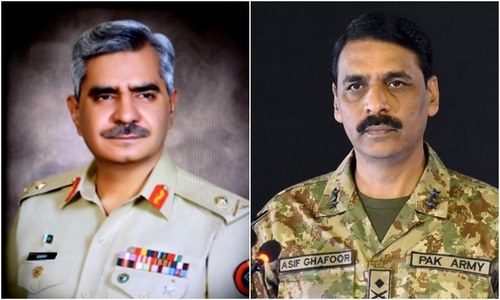
THE new director general of the Inter-Services Public Relations has taken charge at a time when the organisation has acquired an unprecedented profile in the affairs of the country.
Till the decade of the 1990s, ISPR was a relatively small setup playing a modest role as the media arm of the armed forces.
Over the years, however, it has ballooned into a well-resourced, well-equipped and well-staffed organisation that plays multiple roles within the overall domain of media and communications.
In some ways, the rapid expansion and growth of ISPR was a natural by-product of the information revolution that has speeded up since the advent of the digital age.
The military was perhaps the first institution to grasp the immense power of effective communication at a time when the connectivity of citizens was generating unimaginable empowerment at the individual, institutional and national level.
While the ministry of information and other communication and information outfits run by the government struggled to come to terms with the modern demands of the media, the military invested heavily in ISPR and its capacity to project power through weapons of mass influence.
Under the leadership of Lt Gen Asim Bajwa, ISPR transformed itself into a gigantic and high-profile institution that acquired a large footprint on the national landscape. With greater resources, mandate and reach, ISPR started to wield considerable influence in multiple areas of media and communication including films, documentaries and, of course, formation of a national narrative that reflected the thinking of the military leadership.
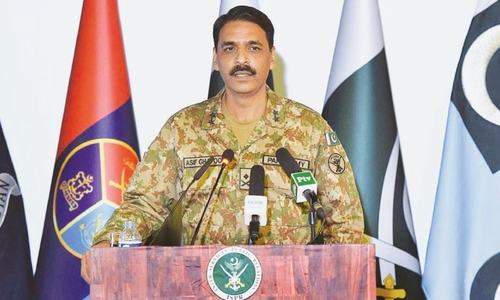
It was, however, under the next director general, Maj Gen Asif Ghafoor, that ISPR started to take on a greater political role. In frequent press conferences and media events, the DG began to express opinions on issues that fell outside the purview of the original ISPR mandate.
Gen Asif Ghafoor also acquired a higher profile on Twitter after becoming very active both through his official and private accounts. His spats with people on the micro-blogging site raised many an eyebrow given the fact that he was the official spokesman of the armed forces.
The outsized presence that ISPR acquired ended up landing the organisation in controversies that should not have involved the institution of the military.
With a new DG now heading ISPR, it is hoped that the armed forces’ media wing will return to its original mandate to become a powerful voice of the military while influencing the national narrative in a positive manner.
Published in Dawn, February 4th, 2020