Iran acknowledges Russia-made missiles targeted Ukraine jet


 1
1
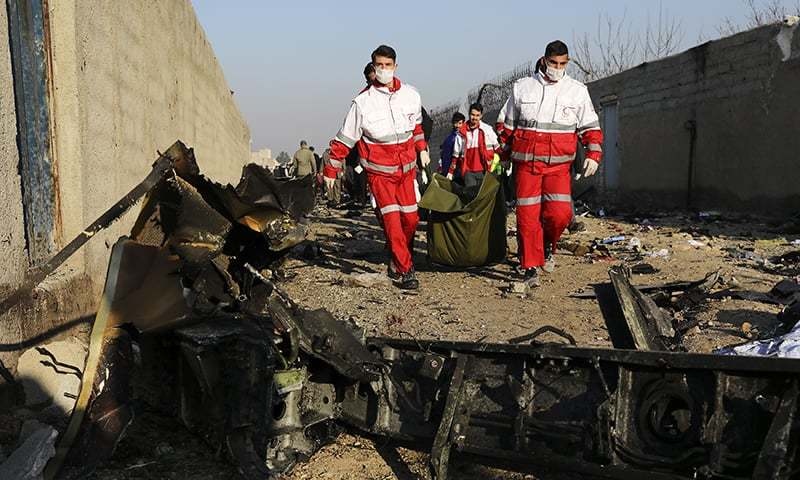

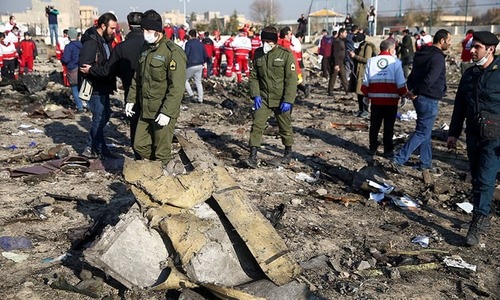
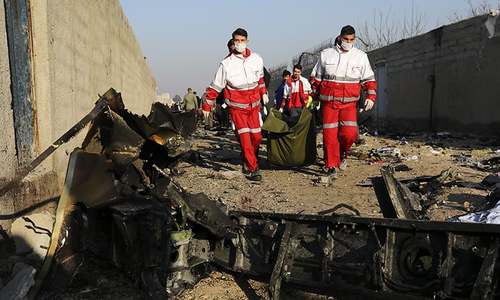
DUBAI: Iran acknowledged on Tuesday that its armed forces fired two Russian anti-aircraft missiles at a Ukrainian jetliner that crashed after taking off from Tehran’s main airport earlier this month, killing all 176 people on board.
The new preliminary report by Iran’s Civil Aviation Organisation however stopped short of blaming the TOR-M1 for the crash of the Boeing 737-800, flown by Ukraine International Airways.
For days after the Jan 8 shootdown, Iran denied that it fired missiles at the plane, initially blaming a technical malfunction and engine fire for the crash.
However, after the US and Canada blamed missile fire for the crash, Iran’s armed forces said anti-aircraft fire from the country’s paramilitary Revolutionary Guard had downed the flight.
The new report identified the missiles fired at the aircraft as coming from the TOR-M1. In 2017, Iran received the delivery of 29 TOR-M1 units from Russia under a contract worth an estimated $700 million.
However, the report said the impact of these missiles on the accident and the analysis of this action is under investigation.
Surveillance footage earlier obtained showed two missiles were fired at the plane. The two minutes of black-and-white footage purportedly shows one missile streaking across the sky and exploding near the plane. Ten seconds later, another missile is fired. Some 20 seconds after the first explosion, another strikes near the plane. A ball of flames then falls from the sky out of frame.
The footage appeared genuine and matched geographic features of the area. It also explained how so many people filmed the shoot down: the first explosion drew their attention so they turned their mobile phone cameras to the predawn sky.
The fire from the explosion, however, appears not to have reached inside the cabin, the report said, citing the condition of debris later recovered from the crash.
The Tor short-range air defense system, code-named the SA-15 by Nato, was designed during Soviet times to shoot down aircraft and precision guided weapons.
It is mounted on a tracked vehicle and carries a radar and a pack of eight missiles. Each vehicle can operate independently. Tor has a range of up to 12 kilometres (7.5 miles) and can hit aerial targets at altitudes of up to 6 kilometres (about 19,700 feet).
Tor missiles explode near their target, taking it down with shrapnel that devastates engines, fuel tanks and other vital components.
Iranian officials have offered contradictory remarks on whether they’ll send the plane’s flight data and cockpit voice recorders abroad to be analysed. The preliminary report by the Civil Aviation Organisation said Iranian officials had asked French and American authorities to send them up-to-date equipment to pull the data in Iran.
In other developments on Tuesday, South Korea Defence Ministry announced its anti-piracy unit operating in the Gulf of Aden was temporarily expanding its mission to the Strait of Hormuz. A ministry statement said the decision was meant to help ensure the safe passage of South Korean vessels and nationals through the waterway. It said the units expanded operation will include the Gulf of Oman and the Persian Gulf.
The ministry said the unit will conduct an independent operation but will cooperate with a US-led coalition if necessary. Already, a US-led operation is surveilling the strait, the narrow mouth of the Persian Gulf through which 20 percent of all the world’s oil passes. A French-led naval coalition is also being created.
Published in Dawn, January 22nd, 2020