0
0

KARACHI, Jan 16: Commenting on the curbs on religious schools and other measures taken by President General Pervez Musharraf to combat terrorism and extremism, the Jamaat-i-Islami Sindh termed these on Wednesday an attempt to break Pakistan’s ideological moorings and slide into the lap of atheist elements.
A unanimous resolution adopted by the Majlis-i-Shoora of the provincial JI, which met under the chairmanship of Asadullah Bhutto, also held that the regime’s decisions were aimed at isolating Pakistan and delivering it to the United States.
The party was of the view that the government’s allegations of creating lawlessness and pursuing self-centred policies by certain religious groups, were contrary to the facts because in the past months these parties had remained peaceful and despite horrendous bombings in Afghanistan, the American and British missions in Pakistan and Afghanistan remained untouched.
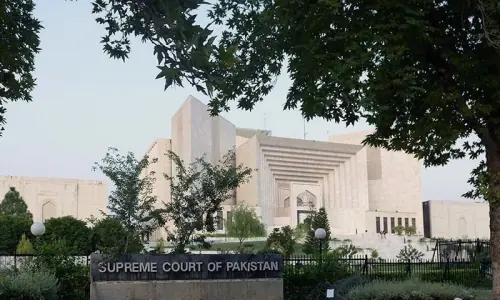
It maintained that government’s claims and sermons could carry more weight and credibility if those who had illegally usurped power and assumed Presidency on their own, relinquished it in the light of the Supreme Court judgment.
The JI recalled the significant role religious schools, scholars and parties had played in the formation and progress of the country. It maintained that, instead of pointing an accusing finger towards religious parties, the rulers must mend their ways.
It maintained that executive orders could not compel the people to change their belief and ideas. It said, instead of making maximum use of Madaris, the government, under pressure from the West, was implementing a conspiracy which was aimed at preventing Muslims from acquiring basic religious education together with modern education.
The JI held that it would not tolerate any comprise and retreat on the Kashmir issue which was a matter of life and death for Pakistan.
It was of the view that “the ban on Jihadi organizations is indirect acceptance of Indian allegations and amounts to a rollback.” However, it claimed that despite such a policy of capitulation, the United States would not support Pakistan’s stand on the issue. Rather it would continue to work on the agenda of weakening Pakistan.
The JI held that the 1973 constitution provided the binding force, and warned that attempts to further mutilate it through ordinances and replacing it by another draft would seriously endanger the country’s unity.