2 killed as aircraft spraying pesticide for locusts crashes in Cholistan


Two people were killed after an aircraft tasked with spraying pesticide for eliminating locusts crashed in Cholistan's Tillo Bangla area in Sadiqabad tehsil on Sunday.
The deceased were identified as Shoaib Malik, the pilot, and aircraft engineer Fawad Butt, both of whom were officials of the Federal Plant Protection Department. Both died instantaneously as the plane crashed into the ground, according to the district administration.
Initial investigations suggest the plane crashed due to a technical fault, said the district administration, adding that the bodies were being shifted to Sheikh Zayed Hospital in Rahim Yar Khan.
Rahim Yar Khan Deputy Commissioner Ali Shahzad said the two men had been tasked with spraying pesticide in Cholistan in order to eliminate locusts. He said that the aircraft had taken off from Sheikh Zayed International Airport on Sunday morning.
In a statement, National Food Security and Research Minister Khusro Bakhtiar expressed his deep sorrow over the incident.
"Our thoughts and prayers are with the families of the young men who lost their lives in the line of duty. Their invaluable services will be remembered forever," he said.
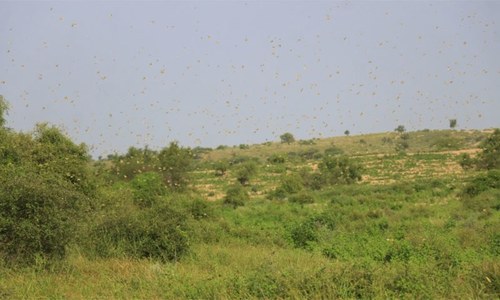
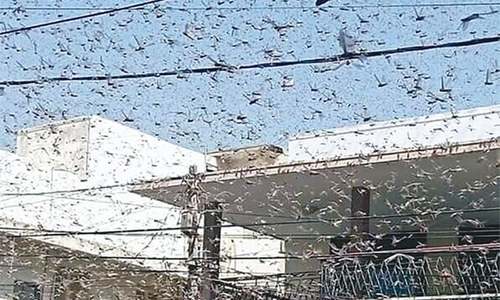
The plane was spraying pesticide in the area to tackle another wave of locust attacks, which began in Dec 2019, on the request of the district administration.
In 2019, widespread heavy rainfall during March and April in Balochistan created ideal ecological conditions for a rapid increase in the number of locusts.
In anticipation of the outbreak, the Punjab government had directed officials to thwart a possible attack by conducting large-scale aerial and land spraying of pesticide.
However, in November 2019, reports surfaced that one of the reasons why the pests had not been eliminated was because the department responsible for the task, the Directorate of Locusts Control, Islamabad, was stocking expired pesticide.
**Additional reporting by Amin Ahmed*