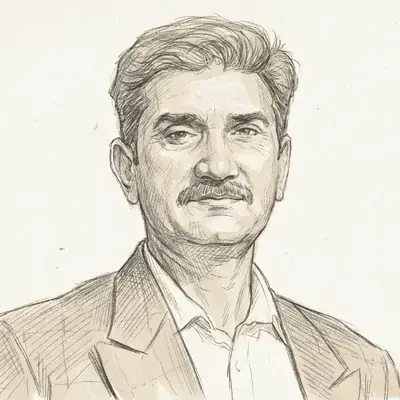
RAWALPINDI: Mohammad Raffique is the last craftsman in Rawalpindi who specialises in the Jinnah cap.
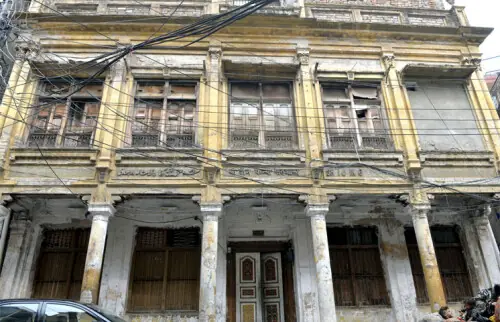
A little more than 30 years ago, craftsmen like him worked across Rawalpindi, from Raja Bazaar to Saddar, but in the last decade their numbers have dwindled until just he remained. Now the 62-year-old works in a corner of a workshop on the top floor of Karakuli House on Bank Road, amidst tailors stitching sherwanis, trying to keep the craft alive.
Eschewing machinery, Mr Raffique works with his hands and it takes him about a month to make two caps. He is the last of his family to still make the Jinnah cap, also known as the Karakuli cap.
Now a rare sight, there was a time when the Jinnah cap was a popular accessory worn by men on formal occasions.
The Karakuli cap comes from Afghanistan, but it was popularised in the subcontinent by Quaid-i-Azam Mohammad Ali Jinnah. Jinnah had started wearing a sherwani from the 1937 All-India Muslim League conference in Lucknow, and he accepted a suggestion from Nawab Mohammad Ismail Khan to start wearing a wool Karakuli topi around the same time. Soon after, the cap became known as the Jinnah cap.

After independence, the sherwani and Jinnah cap became a form of national dress, mandatory for the prime minister, president, judges, bureaucrats and diplomats.
The cap is no longer popular among the public or government officials. Its price, which ranges from Rs6,000 to Rs18,000 per cap, has also kept it out of most people’s wardrobes.
The cap is made with the hide of a newborn Karakul lamb from Afghanistan or Central Asia. The hide and wool of a minutes-old lamb is enough to make one cap.
The process of making the cap is also extensive, and it takes more than a week to complete. Mr Raffique on Bank Road takes a month to make two caps.
Once the leather has been acquired, it is moulded into a round shape on a wooden form called a last. The craftsman takes the customer’s measurements, cuts the leather accordingly and then stitches it in the shape and design chosen by the customer.
The inner and outer parts of the cap are prepared separately and then stitched together by hand. In the last step, the cap is given its triangular shape.
“Once the process is complete we polish the skin of the camel brown cap as it is expensive, and the wool is rare,” Mr Raffique told Dawn.
He said he learned the craft from his father, Sheikh Mohammad Hussain, who owned a Karakuli cap shop in Peshawar’s Qisakhawani Bazaar.
“I have been in this field for the last 50 years,” he said, adding that the number of people who were making these caps has fallen.
“In Peshawar, it was tradition. A father-in-law gave Jinnah caps to his son-in-law and his brothers, relatives and friends, so work would increase during wedding season,” he said. But now, few prayer leaders or religious scholars wear the cap.
Gen Ayub Khan, his son Gohar Syub, Syed Ghaus Ali Shah, George Sikandar Zaman of Khanpur, former prime minister Mohammad Khan Junejo, former prime minister Nawaz Sharif, former governor general Musa and former prime ministers of Azad Kashmir Abdul Qayyum and Farooq Abdullahwore the Jinnah cap, Karakuli House’s owner Hassan Mustafa said.
He said his shop provided the Jinnah cap to all military messes as part of the officers’ ceremonial dress. Former Indian prime minister Atal Bihari Vajpayee was also gifted a Jinnah cap from the shop when he crossed the border at Wagah.
“The caps became expensive because the wool used to make them is imported from Afghanistan,” he explained, adding: “Besides that, it takes a lot of hard work and skill to sew the cap perfectly.”
Published in Dawn, December 8th, 2019