US CG briefed on state of farm sector in Mirpurkhas
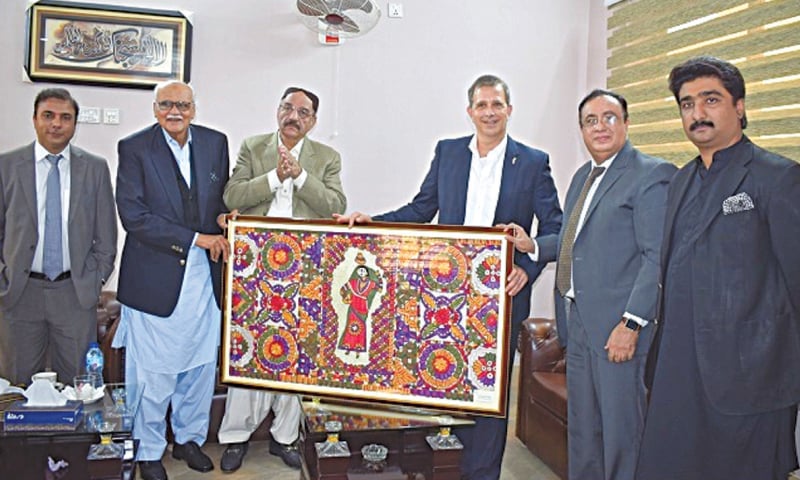
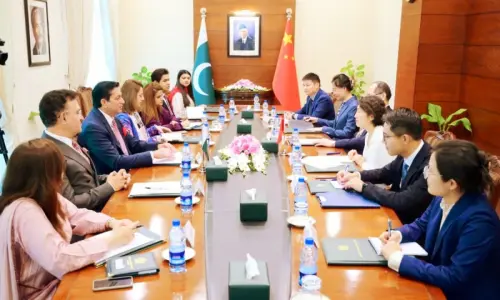
MIRPURKHAS: US Consul General Rob Silberstein along with some other consulate officers visited Mirpurkhas commissioner’s office on Tuesday and received a briefing on the state of agriculture in this part of Sindh.
Pakistan Peoples Party (PPP) MNA Mir Munawwar Ali Khan Talpur briefed the US envoy on major crops grown in Mirpurkhas division and the factors contributing to low per-acre yield and government’s measures to address the issues, as well as the problems being faced by agriculturists and the farming community.
Mirpurkhas Commissioner Abdul Waheed Shaikh, Deputy Commissioner Zahid Memon, Additional Deputy Commissioner Salamat Memon, District Council Chairman Mir Anwer Ali Khan Talpur, MPA Syed Zulfiqar Ali Shah and former federal minister Pir Aftab Hussain Shah Jilani also attended the meeting.
Commissioner Shaikh informed the consulate delegation that Mirpurkhas division was dependant on agricultural produce like other rural areas of the province. He said mango was the chief fruit crop of Mirpurkhas and both government and growers took keen interest in ensuring a high yield and better quality of the produce.
Each year, a mango and summer fruits exhibition is held in Mirpurkhas which attracts thousands of people, including local and foreign buyers as well as agriculture experts. The other crops grown in this division include sugar cane, cotton, wheat, chilli and onion.
The commissioner pointed out that there were several sugar mills functioning here to meet market demand of the commodity.
Regarding prices, he said the provincial government regulated prices of general commodities and would fix official rates of certain crops in order to check price hike in retail market.
He lamented that due to absence of modern machinery and a shortage of water and certified seeds, the division registered a low per-acre yield as compared to other areas of the province. This, he added, ultimately kept the division’s income less than its expenditure.
Commissioner Shaikh said provincial government was making all-out efforts to promote the agriculture sector. In order to provide alternative energy option to growers, solar-powered gadgets and equipment were being provided to the rural population and solar panels were being installed to run tube wells. He also spoke of lining of watercourses and distributaries continuing in the division under a programme being executed to check wastage of water.
MNA Munawwar Talpur told the US envoy that the issue of bonded labour was not one that could not be resolved. District-level committees were there to take every possible measure to curb bonded labour, he added.
Published in Dawn, December 4th, 2019