UN chief urges Myanmar to resolve Rohingya crisis


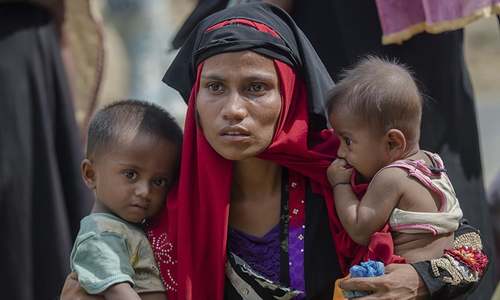
United Nations Secretary-General Antonio Guterres expressed concern on Sunday over the plight of the 730,000 Muslim Rohingya refugees from Myanmar's Rakhine state, calling on Myanmar's government to take responsibility by dealing with the “root causes” of their flight and working toward their safe repatriation.
Guterres spoke as he held a meeting with leaders of the Association of Southeast Asian Nations, to which Myanmar belongs. ASEAN leaders meet annually to try to work out common positions on pressing issues, but also maintain a policy of noninterference in each other's affairs.
A draft of a statement to be issued by ASEAN leaders takes a generally weak tone toward how Myanmar should deal with its Rakhine crisis.
“I remain deeply concerned about the situation in Myanmar, including Rakhine state, and the plight of the massive number of refugees still living increasingly in difficult conditions,” said Guterres.
“It remains, of course, Myanmar's responsibility to address the root causes and ensure a conducive environment for the safe, voluntary, dignified and sustainable repatriation of refugees to Rakhine state, in accordance with international norms and standards.”
He said Myanmar should take measures “to facilitate dialogue with refugees and pursue confidence building measures” and “to ensure humanitarian actors have full and unfettered access to areas of return, as well as communities in need”.
“I welcome ASEAN's recent engagement with Myanmar and encourage its continued efforts,” he added.
ASEAN members' attitudes toward the Rakhine crisis vary. While most countries are content to honour the organisation's principle of noninterference in each other's affairs, Malaysia and Indonesia, which have Muslim-majority populations, would prefer ASEAN take a more proactive position in ensuring just treatment of the Rohingya.
ASEAN's active involvement is mostly limited to helping with humanitarian aid.
The Rohingya fled to Bangladesh after Myanmar's military began a harsh counterinsurgency campaign against them in August 2017 in response to an attack by a fringe group of Rohingya militants.
UN investigators and human rights groups say Myanmar security forces carried out mass rapes, killings and burning of Rohingya homes, for which they could be charged with ethnic cleansing, or even genocide.
In September, a special UN fact-finding mission urged that Myanmar be held responsible in international legal forums for alleged genocide against its Muslim Rohingya minority.
The Independent International Fact-Finding Mission on Myanmar said in a report wrapping up two years of documentation of human rights violations by security forces that counterinsurgency operations in 2017 included “genocidal acts.”
The Rohingya have been harshly discriminated against, even though many have been settled in Myanmar for generations. Many in Myanmar consider them illegal immigrants from Bangladesh, and they have largely been denied citizenship and most of its privileges.
Myanmar refuses to call the Rohingya by their self-chosen name, and instead refers to them as Bengalis. Guterres in his statement avoided using either term, though the details and context made clear he was talking about the Rohingya.
Although Myanmar and Bangladesh have a formal agreement to repatriate the refugees, none have officially returned, fearing for their safety. Rights groups say Myanmar has neither made adequate arrangements for their return nor set up a process ensuring they will have full civil rights.
Guterres also spoke about the urgent need for measures to cope with climate change, a subject that has become his priority.