THERE is widespread disbelief in the country over an antiterrorism court’s verdict in January’s shootout case in Sahiwal. The government has decided to challenge the ruling which acquitted all six CTD officials in the killing of four people.
While not a unique occurrence, no less than 27 of prosecution witnesses turned hostile, allowing the accused relief. These witnesses were originally there to help prove the guilt of the accused police officials in the killing of Muhammad Khalil, his wife Nabila, their teenage daughter and Zeeshan, a friend of Khalil’s who was driving the car.
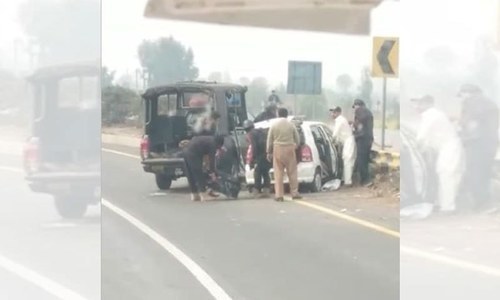
The Lahore-based family was on its way to a wedding when it came under a hail of bullets. In the absence of any witnesses testifying against the accused, the ATC judge dismissed the possibility of supportive evidence reinforcing the prosecution’s case. This included the footage showing images of the car in which the victims were travelling along with three minor children who survived the attack. The footage led to outrage across the country.
This was considered an open-and-shut case of an overzealous police force going mad with their chase after a wrong tip-off. Even the prime minister and members of his cabinet promised exemplary punishment for those responsible.
However, there were also sceptics who warned that the proceedings in court could lead the judge to draw conclusions contrary to the general perception. Those cynics have been proved right, pending of course a government appeal against the verdict.
The Sahiwal verdict on Thursday was followed by a statement by Muhammad Khalil’s brother who accepted the ruling and asked that the case not be used for any political motives. But if that was an attempt to quickly end the matter, the government’s decision to challenge the decision, even if it had to do so without support from the heirs of the victims, has thwarted the move. The case, the debate it stirred, is still open, with its many dimensions about justice, privileges and necessities justified by emergencies.
There have always been grave concerns about how easily the police get away with the gravest of excesses but this is about a more privileged law-enforcement arm. The CTD is a force born of special needs in the wake of the war against militancy, with special cover provided to its acts. But it must still be held accountable for actions that take the life of the innocent.
Published in Dawn, October 26th, 2019