Large-scale manufacturing shrinks for eighth month in row


ISLAMABAD: The large-scale manufacturing index (LSMI) shrank by 3.28 per cent in the first month of current fiscal year, the Pakistan Bureau of Statistics (PBS) reported on Friday.
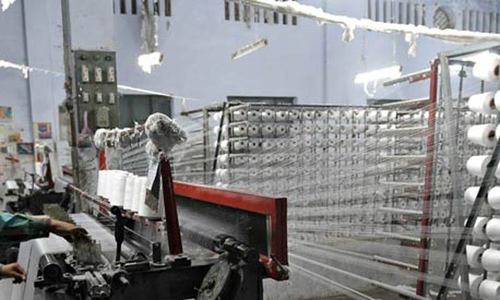
The large-scale manufacturing output has declined for eight months in a row amid dismal performance in the food, beverages, textile, pharmaceutical, chemical, fertilisers, leather and iron and steel sectors raising fears of massive layoffs across the industrial sector.
In the last fiscal year, LSMI sectors dipped by 3.64pc against the target growth of 8.1pc, whereas the government has set LSM target of 3.1pc for the year 2019-20.
According to Annual Plan 2019-20, the industry is expected to pick up pace in 2019-20 with the implementation of envisaged policy measures. The plan anticipates the private sector investment to lead the revival of economic activity with the help of necessary policy and regulatory support through public sector.
However, in the high interest rate environment, it is unlikely that private sector can trigger economic expansion or increase investment.
Sector wise, production data of 11 items under the Oil Companies Advisory Committee registered negative growth of 1.71pc, whereas 36 items under the Ministry of Industries and Production shrank by 3.1pc. However, 65 items by Provincial Bureaus of Statistics posted a paltry growth of 1.53pc.
The lacklustre performance in the industrial sector reflected the overall economic slowdown across various sectors in the ongoing fiscal year.
However, officials believe that despite negative growth in LSMI, the prospective growth in small and medium sized enterprises is expected to remain at the projected levels. The PBS, however, did not map the trends in SME sector.
The LSMI constitutes 80pc of manufacturing and 10.7pc of the overall GDP. In comparison, small-scale manufacturing accounts for just 1.8pc of GDP and 13.7pc in manufacturing.
The LSMI data reveals various factors led to the slowdown including lower Public Sector Development Programme expenditures compared to last year, deceleration in the private sector construction activities and consumer spending on durable goods.
The impact was more noticeable in the construction-allied industries as demand for housing moderated amid rising building materials prices and higher cost of financing. Certain sector-specific issues also contributed to the decline in LSMI.
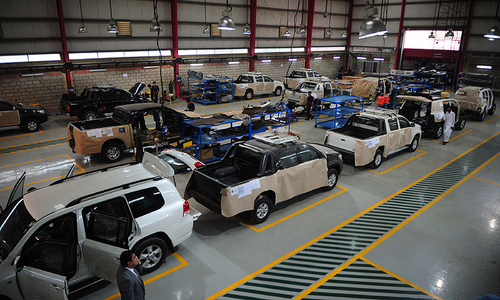
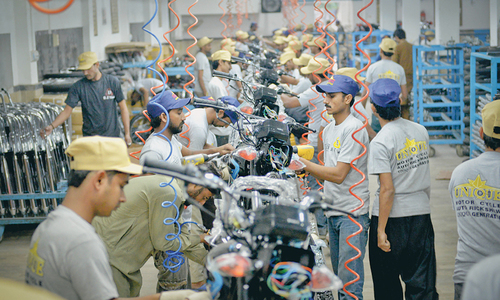
Automobile prices witnessed multiple upward revisions due to currency depreciations, which kept potential buyers at bay. On a year-on-year basis, the auto sector posted a negative growth in almost all variants during the first month of current fiscal year.
Pharmaceutical sector also suffered due to a considerable lag in regulatory adjustments in prices. The pricing issue was in addition to weakening of the local currency, which added to the distress of an import-dependent sector. In the pharmaceutical sector, the production of syrups declined by 32.88pc, and tablets 1.69pc, respectively.
Similarly, lower sugarcane production and carry forward from last year’s inventories further dampened the prospects of sugar industry. In the non-metallic mineral products, cement production was slightly down by 0.13pc in July.
Moreover, production of cooking oil, and tea blended dipped by 5.46pc and 17.65pc, respectively. However, vegetable ghee production increased by 1.91pc in July FY19 on a year-on-year basis.
Published in Dawn, September 21st, 2019