Tunisia votes in second free presidential election since Arab Spring


 1
1
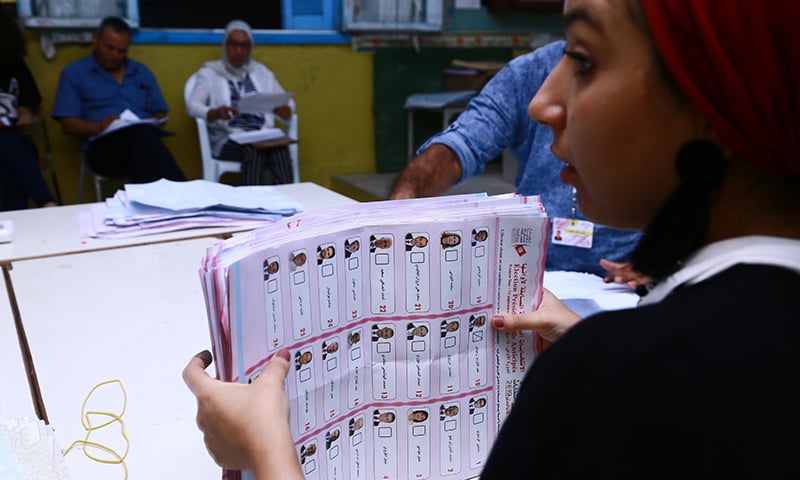

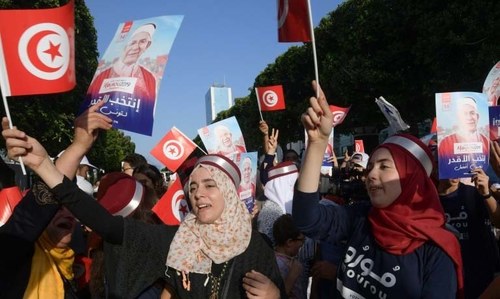
TUNIS: Tunisian voters turned out in large numbers on Sunday to choose from a crowded field of candidates after a divisive campaign in the country’s second free presidential poll since the 2011 Arab Spring.
Prominent candidates, in the absence of opinion polls, included media mogul Nabil Karoui, behind bars due to a money laundering probe, Abdelfattah Mourou, heading a first-time bid for Islamist-inspired party Ennahdha, and Prime Minister Youssef Chahed.
Some 13,000 polling booths opened across Tunisia at 8am and Mourou smiled broadly as he cast his ballot, while Chahed said he was “proud of this great event”, after voting.
“The world is watching. By tonight or tomorrow, Tunisia will be in good hands,” the premier said.
His popularity has been tarnished by a sluggish economy and the rising cost of living. He has also found himself having to vehemently deny accusations that Karoui’s detention since late August was politically inspired.
At polling stations visited by journalists in the early hours, there was a high proportion of older voters, but few young people.
“Where are the young people? This is their country, their future,” said Adil Toumi, a man in his 60s who came to vote “to participate in a national celebration, a victory for democracy”.
By 1pm local time, turnout had reached 16.3 per cent, according to the national elections body.
The election follows an intense campaign characterised more by personality clashes than political differences.
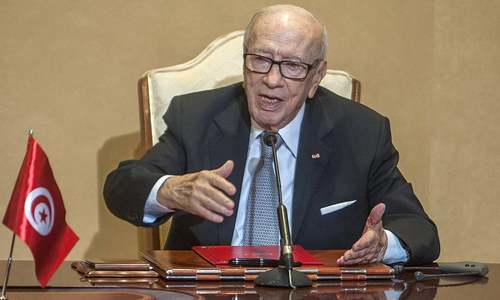
It had been brought forward by the death in July of 92-year-old president Beji Caid Essebsi, whose widow also passed away on Sunday morning.
Essebsi had been elected in the wake of the 2011 revolt that overthrew former dictator Zine El Abidine Ben Ali.
Publication of opinion polls has officially been banned since July, but one thing appeared sure — many voters were undecided until just ahead of voting, due to the difficulty of reading a shifting political landscape.
Some hopefuls have tried to burnish anti-establishment credentials to distance themselves from a political elite discredited by personal quarrels.
Published in Dawn, September 16th, 2019