Justice Isa smells a rat in presidential reference


 54
54


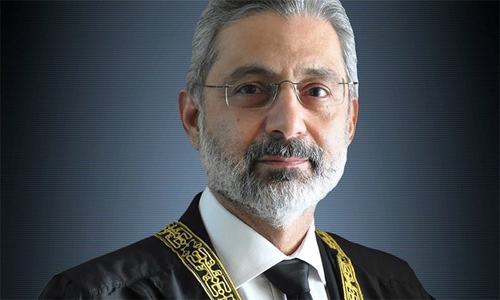
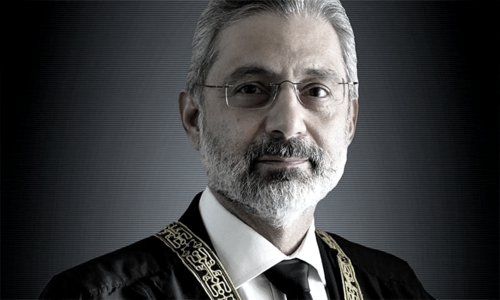
ISLAMABAD: Justice Qazi Faez Isa challenged in the Supreme Court on Wednesday the filing of a presidential reference against him, wondering if it was moved by a proxy with mala fide intention to achieve a collateral purpose.
Drafted and filed by Justice Isa himself under Article 184(3) of the Constitution, the 71-page petition sought a declaration that the in-camera hearing on the references by the Supreme Judicial Council (SJC) was without lawful authority and in breach of the fundamental rights.
“This petition is not just about a judge but sends a signal to all, that they too will be subjected to the same treatment if they persist in acting independently and decide cases according to the Constitution and the law by disregarding vested interest,” said Justice Isa, himself a Supreme Court judge, in the petition. It also sought a restraining order against the SJC till the disposal of the petition since the references undermined the independence of the judiciary.
While rebutting the allegations of possessing properties in the United Kingdom in the name of his wife and children, Justice Isa criticised the “unreasonable conduct” of SJC Secretary Arbab Mohammad Arif, who happens to be the Supreme Court registrar, and asked why Barrister Mirza Shahzad Akbar, chairman of the Assets Recovery Unit, and Zia-ul-Mustafa Nasim, the ARU’s legal expert, were carrying out the functions of bureaucracy when they were not civil servants.
In his 71-page petition, the judge wants SC to declare in-camera hearing on references by SJC without lawful authority
“To the best of petitioner’s knowledge both these gentlemen are not civil servants; they are also not bound by the rules of confidentiality applicable to the civil servants,” Justice Isa contended, adding that those not in the service of Pakistan could not be assigned functions of the executive.
The petition wanted to know about the political affiliation of the two gentlemen, especially with the ruling Pakistan Tehreek-i-Insaf or its coalition partners, wondering whether both acted independently. “By whom these two gentlemen have been employed? What were the terms and conditions of employment of these two gentlemen? Are both Pakistani, foreign or dual nationals? What were the past and present political affiliations of the two gentlemen and what were the income status, wealth tax status and history of the two with supporting documents, before and during the present employment?” it asked.
The petition alleged that the SJC secretary had discriminated against Justice Isa by granting every conceivable advantage to the government and two complainants [of private reference]. It said the secretary did not disclose to the SJC that a large number of complaints/references — long before the two references against Justice Isa — were still pending and listed both references out of turn before the council. “As per normal procedure, the rule of first-in-first-out applies and the earlier matters must be listed and decided before subsequent ones, unless of course on account of some urgency,” the petition argued.
It said the SJC did not direct an out-of-turn hearing of the two references, alleging that the secretary, who is a government servant on deputation, must have been pressurised to list both references before all other pending ones. Thus without seeking an order from the council and without giving any reason, the normal procedure was not followed by the SJC secretary when Article 10A guaranteed due process.
The petition asked if the SJC had the jurisdiction to consider the conduct of judge’s wife, examine her income tax history and applicability or non-applicability of Income Tax Ordinance 2001.
Published in Dawn, August 8th, 2019