Trump condemns white supremacy, racism after two gun massacres in US

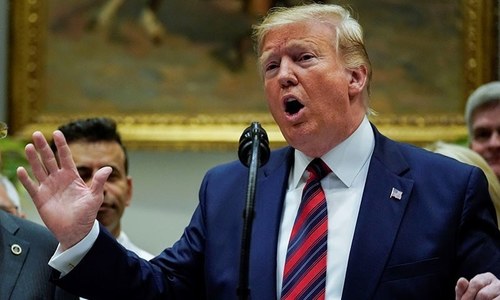
President Donald Trump on Monday, in a strongly worded response to two gun massacres over the weekend, denounced white supremacist extremism and racism, and said mass murderers should be "quickly" executed.
Facing a blizzard of accusations that his own anti-immigrant rhetoric has fueled radicals across the country, Trump used his live address from the White House to issue an unusually direct condemnation of racists.
"Our nation must condemn racism, bigotry, and white supremacy," he said, adding that he had directed the FBI to use all resources to combat "hate crimes and domestic terrorism".
Trump's statement, responding to massacres in El Paso, Texas and Dayton, Ohio, was markedly different from his usual line minimising the dangers of white supremacist attacks.
This followed the emergence of an anti-immigrant screed published by the alleged Texas shooter that eerily echoed some of Trump's own campaign speech statements about an "invasion" across the US-Mexican border.
The gunman killed 20 people as they shopped at a crowded Walmart in El Paso on Saturday morning, while nine more people were shot dead outside a bar in a popular nightlife district in Dayton just 13 hours later.
A 21-year-old from Allen, a suburb of Dallas, surrendered to police outside the El Paso Walmart. US media identified him as Patrick Crusius, who is white.
Crusius wrote that the attack "is a response to the Hispanic invasion of Texas," and made references to the Christchurch shootings in New Zealand, where a white gunman killed 51 mosque worshippers in March.
Trump proposed almost nothing in respect to tightening access in the United States to the kind of powerful weapons routinely used in the ever more frequent mass shootings.
Read: Deadliest recent mass shootings in the United States
He had tweeted earlier on Monday that increased background checks at the time of gun purchases should be considered, but he did not mention this in his speech.
He also left out another suggestion tweeted earlier in the day that any gun law reform should be linked to changes in immigration laws.
Trump did say he supported what are known as "red flag" laws allowing the authorities to confiscate weapons from people ruled to present grave risks.
But his overwhelming focus was on mental illness, which he suggested was the main problem behind the spate of rampages by heavily armed killers in schools, businesses, and stores.
"We must reform our mental health laws to better identify mentally disturbed individuals who may commit acts of violence and make sure those people not only get treatment, but when necessary, involuntary confinement," Trump said. "Mental illness and hatred pulls the trigger, not the gun."
Trump said culprits should face the death penalty, which is banned in almost half the country, and "this capital punishment be delivered quickly, decisively, and without years of needless delay".