Iran set to exceed nuclear deal uranium enrichment cap

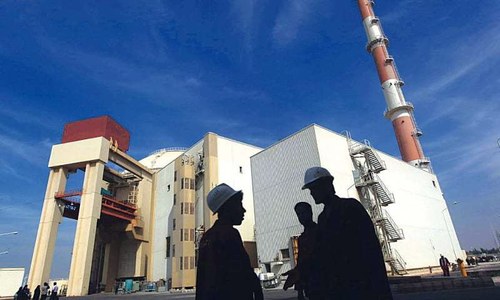
Iran on Sunday said it was set to breach the uranium enrichment cap set by an endangered nuclear deal within hours as it seeks to press signatories into keeping their side of the bargain.
The move — involving purifying beyond the 3.67 per cent allowed by the 2015 agreement — comes despite opposition from the European Union and the United States, which has quit the deal.
Read: Iran to take new steps to reduce commitment to nuclear deal on July 7
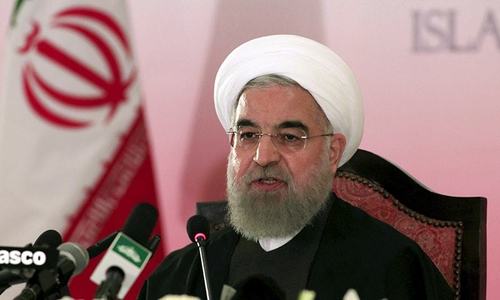
President Hassan Rouhani's order to exceed the threshold would be implemented "in a few hours" after the last technical details were sorted, Iran's Atomic Energy Organisation spokesman Behrouz Kamalvandi said live on state television.
Rouhani initially flagged the Islamic republic's intentions on May 8, exactly a year on from US President Donald Trump unilaterally abandoning the multilateral deal.
He has said the move is in response to a failure by remaining state signatories to keep their promise to help Iran work around biting sanctions reimposed by the US in the second half of last year.
French President Emmanuel Macron told Rouhani of his "strong concern" over the risk of weakening the nuclear agreement and the consequences that would follow during a telephone call on Saturday, according to a statement from the Elysee Palace.
However, the two leaders agreed to "explore by July 15 the conditions for a resumption of dialogue between all parties", the statement said, adding that Macron would consult with Iranian authorities and international partners to bring about the "necessary de-escalation" of the situation over the coming days.
It is not yet clear how far the Islamic Republic will boost enrichment.
But a top advisor to Iran's Supreme Leader Ayatollah Ali Khamenei hinted on Friday it could reach five per cent.
The 2015 deal was reached between Iran and six world powers — Britain, China, France, Germany, the United States and Russia — and saw Tehran agree to drastically scale down its nuclear programme in exchange for sanctions relief.
Washington began reimposing sanctions in August 2018 and has targeted crucial sectors including oil exports and the banking system, fuelling a deep recession.
The 3.67 per cent enrichment limit set in the agreement is sufficient for power generation but far below the more than 90 per cent level required for a nuclear warhead.
Rouhani has stressed that Iran's action would be reversed if the other parties provided relief from the US sanctions.
The Iranian president has insisted that his country's policies are not meant to "hurt (the deal), but to preserve" it.
'Extremely concerned'
France has warned Tehran that it would "gain nothing" by leaving the deal and has said "challenging the agreement would only increase tensions" in the Middle East.
Iran says that it is not violating the deal, citing terms of the agreement allowing one side to temporarily abandon some of commitments if it deems the other side is not respecting its part of the accord.
The diplomatic chiefs of Britain, France, Germany and the EU have said they were "extremely concerned".
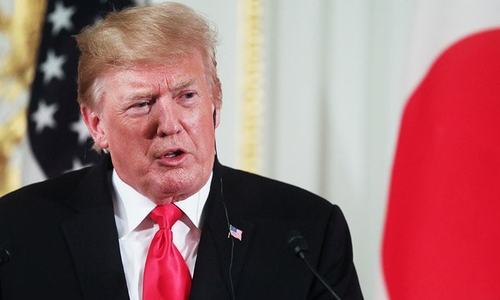
Trump, meanwhile, has warned Iran that it is "playing with fire".
'Strategic patience'
Iran says it exercised "strategic patience" for a year after the US withdrawal, waiting for the other signatories to make good on promised economic benefits.
But on May 8, Tehran announced it would no longer respect two key limits — a 1.3-ton maximum for heavy water reserves and a cap of 300 kilogrammes on its low-enriched uranium stockpile.
Read: Iranian media say uranium stockpile exceeds 2015 limits
The IAEA has in recent days confirmed that Iran has breached the limit of 300 kilogrammes and has scheduled a special meeting on Iran's nuclear programme for July 10.
Also on May 8, Tehran gave a 60-day ultimatum — a deadline that expires Sunday — to deal partners to help it circumvent US sanctions, on pain of abandoning two more nuclear commitments.
One was the enrichment cap. The other was a freeze on construction of a heavy water reactor.
Rouhani referenced the reactor on Wednesday, telling critical powers "according to you, (this) is dangerous and can produce plutonium".
Europe has sought to salvage the nuclear deal by setting up a payment mechanism known as INSTEX which is meant to help Iran skirt the US sanctions.
But Rouhani has dismissed the mechanism as "hollow" because it has not facilitated purchases of Iranian oil.
'March towards bomb'
Israel's energy minister described as moderate on Sunday an announced increase of Iranian uranium enrichment but accused Tehran of breaking out of internationally agreed limitations on its nuclear projects and moving towards a potential bomb.
"Iran has begun — while it is a moderate rise right now — but it has begun to raise, to break out of the uranium enrichment curbs that were imposed on it," Yuval Steinitz, a member of Prime Minister Benjamin Netanyahu's security cabinet, told Israel's Ynet TV.
"It means ... that it is brushing off the red lines that were agreed (and) that it has begun its march, a march that is not simple, toward nuclear weaponry."