44 killed as air strike hits migrant detention centre in Libya


 4
4


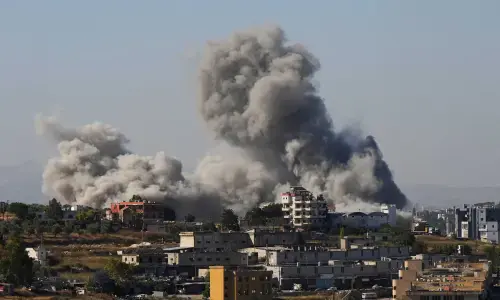
TRIPOLI: An air strike hit a detention centre for mainly African migrants in a suburb of the Libyan capital Tripoli late on Tuesday, killing at least 44 people and wounding more than 130, the UN mission to Libya said.
It was the highest publicly reported toll from an air strike or shelling since eastern forces under Khalifa Haftar launched a ground and aerial offensive three months ago to take Tripoli, the base of Libya’s internationally recognised government.
United Nations Libya envoy Ghassan Salame condemned the strike, saying it “clearly amounts to the level of a war crime”. “The absurdity of this ongoing war has today reached its most heinous form and tragic outcome with this bloody, unjust slaughter,” Salame said in a statement.
Libya is one of the main departure points for African migrants, fleeing poverty and war, to try to reach Italy by boat, but many are picked up and brought back by the Libyan coast guard, supported by the European Union.
Thousands are held in government-run detention centres in what human rights groups and the United Nations say are often inhuman conditions.
The UNHCR refugee agency had already called in May for the Tajoura centre, which holds 600 people, to be evacuated after a projectile landed less than 100 metres (330 feet) away, injuring two migrants.
Tajoura, east of Tripoli’s centre, is home to several camps belonging to forces allied to the internationally recognised government, which have been targeted by air strikes for weeks.
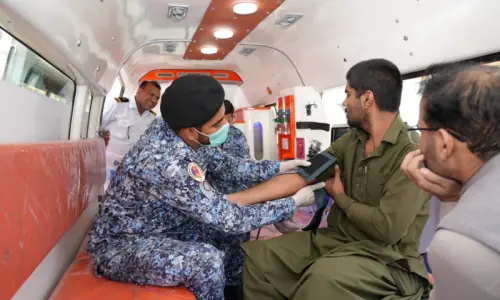
Photos published on Tuesday showed African migrants undergoing surgery in a hospital after the air strike. Others lay on beds, some covered in dust or with bandaged limbs.
“Our teams had visited the centre just yesterday (Tuesday) and saw 126 people in the cell that was hit. Those that survived are in absolute fear for their lives,” medical charity Medecins Sans Frontieres (Doctors Without Borders) said in a statement.
Haftar’s Libyan National Army (LNA), allied to a parallel government based in eastern Libya, has seen its advance on Tripoli held up by robust defences on the outskirts of the capital, and said it would start heavy air strikes after “traditional means” of war had been exhausted.
His attempt to capture Tripoli has derailed UN attempts to broker an end to the chaos that has prevailed in the oil- and gas-producing North African country since the violent, Nato-backed overthrow of Muammar Qadhafi in 2011.
The UN refugee agency and International Organisation for Migration called for an independent investigation and bringing perpetrators to account. “Coordinates of such centres in Tripoli are well known to combatants, who also know (that) those detained at Tajoura are civilians,” the two UN agencies said in a joint statement.
UNHCR chief Filippo Grandi tweeted that he had three messages concerning the detained migrants: “They must NOT be detained; civilians must NOT be a target; Libya is NOT a safe place of return. And of course, states with influence must cooperate to end conflict, rather than fuel it.” In a statement, the Tripoli-based government blamed the “war criminal Khalifa Haftar” for the incident.
Moussa Faki Mahamat, chairman of the African Union Commission, demanded an immediate ceasefire and an independent investigation “to ensure that those responsible for this horrific crime of innocent civilians be brought to account”.
An LNA official denied that his force had hit the detention centre, saying that militias allied to Tripoli had shelled it after a precision air strike by the LNA on a military camp.
The LNA air campaign has failed to take Tripoli in three months of fighting, and last week lost its main forward base in Gharyan to Tripoli’s forces.
Both sides enjoy military support from regional powers. The LNA has been supplied for years by the United Arab Emirates and Egypt, while Turkey recently shipped arms to Tripoli to stop Haftar’s assault, diplomats say.
The conflict threatens to disrupt oil supplies, boost migration across the Mediterranean to Europe, scupper UN plans for an election to defuse the rivalry between the parallel administrations in east and west — and create a security void that Islamist militants could fill.
Published in Dawn, July 4th, 2019