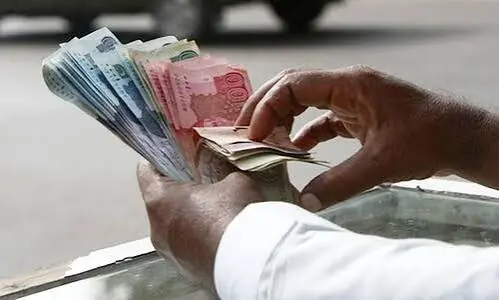
KARACHI: After relative calm in the currency market during the last few weeks, the dollar gained Rs2 against the local currency in the interbank market on Monday.
However, the volatility in the open market was contained after most of the currency dealers stopped selling the greenback and started buying it on lower rates.
The dollar traded as high as Rs150.80 before closing at Rs150.30 in the interbank market during the first session as the rupee’s fall began from day’s outset recording intraday losses of 2.30 during the day.
“We sold dollars at Rs150.80 but the closing rate fell down by 50 paisa to Rs150.30,” said a banker dealing in the interbank market.
“I believe the pressure on dollar was due to high payments which were pending for a week due to long holidays which included Saturday and Sunday,” he explained.
The currency markets had stabilised during last 10 days of Ramazan as dollar inflows from expatriates increased due to the festive season which helped maintain equilibrium. The dollar, before the bank holidays on account of Eid, was trading at Rs148.50.
Bankers said the inflow of export proceeds were lower than usual while stuck up proceeds landed on Monday which helped the interbank rate come down from the intraday high of Rs150.80.
“While the interbank was touching new peaks, the dollar in the open market was selling at Rs151,” said Exchange Companies Association of Pakistan Secretary General Zafar Paracha.
However, he denied that the volatility was a result of dollar shortage in the open market. “Enough dollars are available in the open market. The increase in the rate was the direct result of price increase in the interbank market. If banking rate goes down, the open market will follow,” he said.
The dollar slipped back to Rs150 as selling and Rs149.50 as buying rates.
Some currency experts believe the uncertainty attached with the national budget could also have played a role in rupee’s fall and are likely to go further if some budgetary decisions go directly or indirectly against the exchange rate.
They believe if the government succeeds to adopt solid strategy to increase exports, the exchange rate could become stable in the long run.
Bankers said the Saudi oil facility on deferred payments would greatly reduce the pressure on dollars’ demand and would ultimately bring down the exchange rate.
Published in Dawn, June 11th, 2019