WHO experts begin probe into sudden spread of HIV in Larkana


 4
4

LARKANA: The team of World Health Organisation that arrived in the country on Tuesday to probe reasons behind the spread of HIV and investigate from where the virus had travelled to the area, visited the children’s treatment centre for HIV/AIDS in Chandka Medical College children’s hospital on Thursday and inquired the staff about how they handled the patients.
The team asked project manager of Sindh AIDS Control Programme who accompanied them about the facilities and the protocol for treating AIDS patients. On Friday, the team members would visit Ratodero taluka hospital to personally observe the ongoing process of blood screening for HIV, said sources.
Before the visit of the healthcare facility, the WHO team held a meeting with Sindh Minister for Health Dr Azra Pechuho and other stakeholders at Darbar Hall to review the overall situation regarding the outbreak of HIV/AIDS in Ratodero and the efforts put in so far to fight the virus.
Olive Morgan, the team leader, told that meeting that the scope of the delegation was to dig out the reasons behind the spread of the deadly disease and also see from where it had travelled to the area.
He said that WHO was ready to help patients suffering from the deadly virus. The participants in the meeting exchanged views and discussed certain proposals as to how best to handle the situation. The delegation also handed over AIDS medicines to the minister.
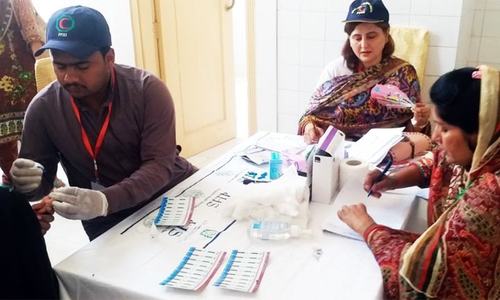
The minister said that since the outbreak of the virus, the health department had set up blood screening camps in and around Ratodero to test the population and opened treatment centers in hospitals. She termed the situation a ‘challenge’ and expressed optimism about overcoming it in near future.
The minister accompanied by health officials later visited blood screening centre in Ratodero taluka hospital where she told reporters that the WHO delegates were working on different diseases and they would provide the Sindh government a detailed study report on HIV/AIDS.
She said that both Global Fund and Sindh government were financially contributing towards efforts to combat the virus and “we are planning to systematically and scientifically spend the funds”. She claimed a ‘drop’ in the virus’ intensity and said that people were very afraid of the virus.
She said that so far 712 persons had been diagnosed as HIV positive at the blood screening centre at Ratodero and announced that WHO and other stakeholders would help Sindh government in establishing good treatment centers.
She said that during their stay the foreign delegates would interact with different communities, visit blood screening camps and treatment centers and compile a report with the findings and reasons which led to the virus’ spread.
Secretary for health Dr Saeed Ahmed Magnejo, Larkana commissioner Saleem Raza Khuhro, project manager of Sindh AIDS Control Programme Dr Sikandar Memon, deputy commissioner, representatives of PPHI, Expanded Programme of Immunisation and district health officer attended the meeting.
15 more test positive for HIV
Fifteen, 11 among them children, tested positive for HIV during ongoing blood screening test at Ratodero taluka hospital where 286 persons were screened on Thursday. Among them four were adults (one male and three females) and 11 were children (six boys and five girls), said sources.
Nine health facilities sealed
Ghulam Yaseen Vessar, deputy director of anti-quackery section of the Sindh Healthcare Commission, sealed nine healthcare facilities on the outskirts of Larkana after raids.
Mr Vessar said that the health facilities were either run by quacks or their premises were found unfit for being clinics. Three clinic owners had been warned to rectify shortfalls or face action, he said. So far 189 clinics had been sealed and 61 had been issued warning, he said.
Published in Dawn, May 31st, 2019