Section 144 imposed in South Waziristan for 'public safety'

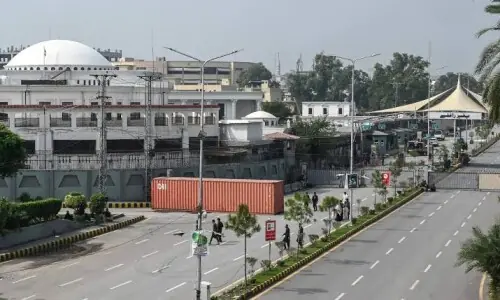
Section 144 of the Criminal Procedure Code — a law concerning the maintenance of public order — was imposed in South Waziristan tribal district on Monday evening in the "wake of public safety" and in order to maintain the law and order situation in the area.
An order imposing Section 144, issued by Nauman Afzal Afridi, the deputy commissioner of South Waziristan tribal district, came into effect on Monday immediately for a month.

The order stated that reports were received that "certain elements are resorting to objectionable, prejudicial, hate speeches against the state institutions in public gatherings, assemblies and processions which are likely to disturb the public peace and law and order situation" of the area.
"... In my opinion there are sufficient grounds to proceed under Section 144 CrPC to prevent all such gatherings, processions and rallies prejudicial to public peace and tranquillity," the order added.
In order to maintain law and order in the region, and in reference to the prevailing law and order situation in the district as well as in order to ensure the security of property and lives of the general public, as per the order, a complete ban under Section 144 was to be imposed on:
- Ban on all such gatherings, rallies and processions in the limits of South Waziristan tribal district
- Ban on delivering provocative and objectionable speeches
- Ban on carrying and displaying all kinds of arms/ammunition and other lethal weapons cudgel, swords, spears, bludgeons, guns knives and any other articles which is capable of being used for causing physical violence and the carrying of any corrosive substance or explosives, carrying and collection or preparation of stones or other missiles or instruments of means of casting or impelling missiles in public places
- Ban on aerial firing
- Ban on use of tinted glasses in the vehicles
The deputy commissioner's order added that anyone who failed to comply could be punished under Section 188 (disobedience to order duly promulgated by public servant) of the Pakistan Penal Code.
The imposition of Section 144 in South Waziristan comes after a clash took place between Pashtun Tahaffuz Movement (PTM) workers and Pakistan Army troops on Sunday in North Waziristan tribal district.
Three people were killed and 15 ─ including five soldiers ─ were injured in an exchange of fire in North Waziristan's Boyya area, when the Kharqamar checkpost was attacked during a protest, in which PTM members were also participating.