Analysis: Amit Shah helped craft Modi’s winning strategy

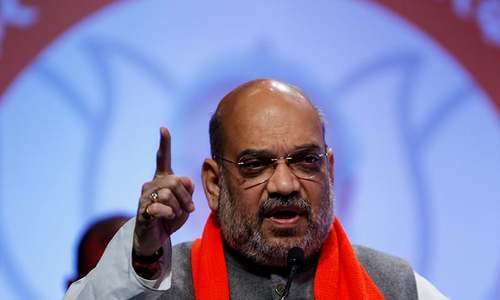
NEW DELHI: Amit Shah, who has long been Modi’s backroom strategist, helped run one of India’s most divisive election campaigns over the past six weeks to rouse the Bharatiya Janata Party’s nationalist base and overcome the loss of key state elections in December.
Read: Modi wins second term by landslide, pledges inclusive govt
Their efforts blunted voter discontent at lack of jobs and farm distress by portraying the opposition as weak and indecisive at best and at worst, appeasing minority Muslims and arch foe Pakistan, to deftly exploit national security fears.
“Modi and Shah work in tandem,” said a BJP official who has worked closely with the steely-eyed 54-year-old Shah. “There is no doubt that Modi is India’s most popular leader and national figure. Translating his personal popularity into a political victory ... requires planning and execution to the last detail. Shah has done that to near perfection.”
Modi’s ruling alliance (NDA) won an even bigger parliamentary majority than in 2014, showing that the BJP not only held the northern heartland but made huge gains in the east, a political strategy that Shah launched.
Now his reward could be a top government post, probably the federal home, or interior, ministry, bringing vast powers over security forces and domestic intelligence, said political analyst Nilanjan Mukhopadhyay. “From a backroom guy who was a bit diffident about all the charges pending against him, Amit Shah’s transition is complete. He is now the legitimised inheritor of Modi’s legacy.”
Modi ran the government for five years with unquestioned authority while Shah, a Hindu hardliner who also hails from the prime minister’s home state of Gujarat, presided over the BJP with an iron hand, as its chief.
For more than a year, he focused propaganda efforts in West Bengal, which is ruled by a firebrand regional leader supported by the state’s Muslims.
Shah fuelled nationalist sentiment by accusing his rivals of appeasing Muslims with funding for clerics and religious schools that turned the state into a replica of neighbouring Bangladesh, a Muslim-majority country and source of illegal immigrants.
“The BJP may just have cracked open the formula to winning over Bengali votes, and the credit is Shah’s,” said Sandeep Shastri, pro vice chancellor of Jain University in Bengaluru.
Shah kicked off a campaign last month against Muslim immigrants, likening them to termites, while backing citizenship measures for Buddhists, Hindus and Sikhs from Afgahnistan, Bangladesh and Pakistan.
Both Modi and Shah emerged from the cauldron of politics in their home state of Gujarat.
A relentless politician, Shah has himself run 29 elections from municipal bodies to parliament and lost none. He travelled 150,000 km to address 161 public rallies during the election, he said last week.
“They have been political associates for 30 years-plus,” said a Gujarat state official. “They know each other’s secrets, theirs has been a relationship of mutual trust, and gains from the association.”
Shah could be a potential replacement once Modi bows out when he turns 75 in 2025, a rule the prime minister adopted to edge out older party leaders who had sought to resist his rise.
Published in Dawn, May 24th, 2019