RAWALPINDI: The federal government will form a technical committee to look into the ways water can be brought from Ghazi Barotha to meet the needs of Rawalpindi and Islamabad until 2050.
The committee will decide whether the project will be launched on a build-operate-transfer (BOT) basis or through a public-private partnership, as the government does not have the money to launch the project itself.
The Rawalpindi Development Authority (RDA) and Capital Development Authority (CDA) have finalised the members of the committee, which will meet next week.
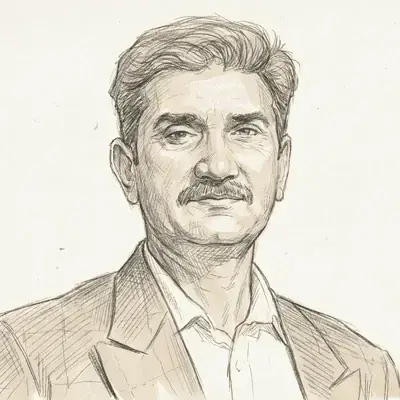
On Friday, the committee met with former finance minister Asad Umar – who heads the National Assembly Standing Committee on Finance – in the chair. The meeting was also attended by Special Assistant to the Prime Minister on CDA Affairs Ali Awan and RDA Chairman Arif Abbasi, as well as senior finance ministry officials.
Committee will decide whether to initiate project on build-operate-transfer basis or through public-private partnership
The Ghazi Barotha Project was proposed in 2006 as a way to bring 200 million gallons of water daily (MGD) to the twin cities, at a cost of Rs37 billion. The project was supposed to start in 2009 and end in 2013, but could not be initiated due to a lack of funds.
There were also objections to the project from other provinces. In 2016, the Council of Common Interest agreed to give Rawalpindi and Islamabad 200 MGD of water in the first phase of the project; 100 MGD for Islamabad and 50 MGD for Rawalpindi’s city and cantonment areas respectively.
However, experts believed that the cost of the project could have doubled in the intervening years.
“If work had started in 2009 the cost of the project would be limited to Rs37bn. Now, more money will be spent on the project,” a senior official said.
Mr Umar said the project needs to be started to end the water shortage in the twin cities.
He said the committee would soon finalise whether the project should be carried out on a BOT basis or under a public-private partnership, as it will cost a lot.
He added that he is not chairing the technical committee, but chaired the meeting of the committee, and said that the civic bodies were asked to nominate technical staff.
He said the PTI had promised to end the water shortage in the capital during its election campaign.
He said that Islamabad’s water requirement has reached 150 MGD, but under the present system the capital receives 50 MGD.
“After the project, Islamabad will get 100 MGD of water from Ghazi Barotha, which will be sufficient for the next 10 years,” he said.
Mr Umar said installing tubewells was not the solution to meeting water needs, as groundwater is depleting rapidly in the region. He said installing more tubewells would lead to extracting contaminated water.
Mr Abbasi from the RDA said that supplying water from Ghazi Barotha Dam is the only solution to the water shortage in Rawalpindi and Islamabad.
At present, there are more than 1,000 tubewells installed in the twin cities which has caused the groundwater level in the region to deplete rapidly, he said.
He said Rawalpindi would receive 100 MGD from the project, which would be enough water to meet the city and cantonment areas’ requirements until 2050.
The city and cantonment areas currently receive water from Khanpur Dam, Rawal Dam and tubewells.
Published in Dawn, May 20th, 2019