Police need to address public complaints to unburden judiciary: CJP


ISLAMABAD: The Chief Justice of Pakistan and chairman of the Law and Justice Commission of Pakistan (LJCP) on Tuesday said police departments needed to take initiatives and address grievances of the general public to unburden the judiciary.
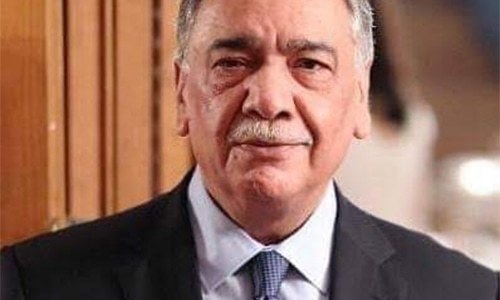
Chairing a meeting of Police Reforms Committee at the Supreme Court, Chief Justice Asif Saeed Khan Khosa said the committee was a forum where such initiatives can be developed.
The subjects discussed in the meeting included: measures taken to improve quality of investigation and its outcome, output of liaison with judicial academies for joint training of investigation officers (IOs) and prosecutors, enhancing the effectiveness of the criminal justice system in dealing with anti-terrorism act cases and a proposal to organise a national conference on investigations by the LJCP in collaboration with the National Police Academy in June this year.
The IGs of all four provinces, Islamabad, Azad Jammu and Kashmir (AJK) and Gilgit-Baltistan informed the committee about the performance of police complaint redressal centres from January to April 2019 which included information such as number of complaints, disposal of complaints, pending complaints and actions taken against delinquent police officers.
The committee was informed by the police officers that a checklist had been prepared for IOs who were following it before submitting challans.
The police officers told the committee that standard operating procedures (SOPs) had also been prepared for conducting identification parade and other important factors required for investigation, which were now mandatory and needed to be followed by the IOs for completing their investigations.
As per earlier decision of the committee, various police departments have started arranging courses and trainings in collaboration with the judicial academies to improve skills of the IOs and it was decided at the meeting that such trainings would continue.
Published in Dawn, May 8th, 2019