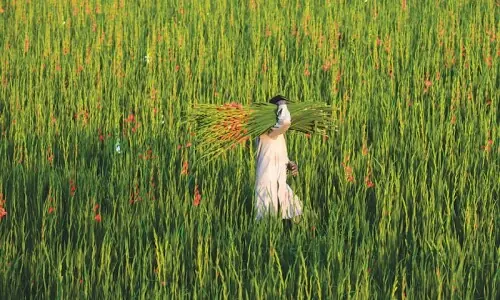
After wheat, rice is the second most important staple of Pakistan. Through exports, it contributes significantly to the country’s exchequer. This is especially true for basmati rice which is known for its aroma and quality, and is a specialty of the country. Rice is grown in all provinces on an area of 7,164 thousand acres. However, it is a water guzzler.
Transplanted puddled rice (TPR) is the preferred mode for growing the crop in Pakistan. A puddled field is one where the soil is ploughed under 10-12 inches of standing water. In TPR, rice seedlings are raised in nurseries till they are 4-6 weeks old, before being transplanted to puddled fields.
Rice is a water loving cereal. It takes about 3,000 to 5,000 litres of water to produce one kilogram of rice. 93.6 per cent of fresh water in Pakistan is consumed by agriculture of which rice accounts for 35pc.
Due to declining water resources and high water requirement of TPR, it is the need of the hour to enhance water-use efficiency and water productivity. Among various technologies, dry direct seeded rice (DSR) is the best option for water conservation.
It takes about 3,000 to 5,000 litres of water to produce one kilogram of rice
In the DSR sowing method, paddy seed is sown directly in well prepared fields through DSR drill, removing the need for seedlings to be raised in a nursery. Through this method, 25-30pc of the water consumed can be saved while using 30pc less fuel. Furthermore, less labour and time is required and optimum plant population can be obtained easily.
In Pakistan, especially in Punjab, DSR sowing method in rice crop is getting popular day by day, with area under DSR gradually increasing. Last year, estimated area under DSR was 114 thousand acres, out of which 104 thousand acres were in Punjab alone.
Factors such as severe water shortage and expensive labour due to industrialisation and urbanisation, has led the rice farming community of Pakistan to want to shift from TPR to DSR sowing technology. But they are unable to do so effectively because of the menace of weeds infestation in DSR.
Weeds are undesirable plants whose removal is essential because they compete with the crop for sunlight, water and nutrients. Weed infestation adversely impacts rice by 15-20pc and can go up to 50pc.
A DSR crop badly infested with weeds can fail entirely. Weeds in rice crop can be categorised into three classes: broad leaved, sedges and grasses weeds.
In the TPR sowing system, weed control is easy as the puddled soil inhibits weeds germination. Whereas, in DSR sowing technology, weed control is very difficult. Since weeds germinate at the same time as rice seedlings, they compete for light and nutrients. Weed competition in DSR is at its peak during the first three weeks.
No doubt, DSR technology is the future of rice in Pakistan. But this future depends on proper weed management, especially from noxious weeds like ghora, madhanas and kallar or bansi grass.
Integrated weed management is a systematic approach in which the control of weeds is achieved by keeps its infestation below economic injury level. This can be done by combining any two or more preventive, cultural and herbicidal weeds management methods.
Crop rotation, mulching of sesbania (jantar) and stale seed bed or double rouni (creating a seedbed weeks before it is due to be sown) are the best methods of cultural control of weeds in DSR system.
However, use of herbicide, such as application of glyphosate, is indispensable. Without herbicidal weed management, appropriate control can’t be achieved.
The writer is an agri services officer at Fauji Fertiliser Company
Published in Dawn, The Business and Finance Weekly, May 6th, 2019