New Zealand bans assault weapons merely a week after Christchurch terror attacks


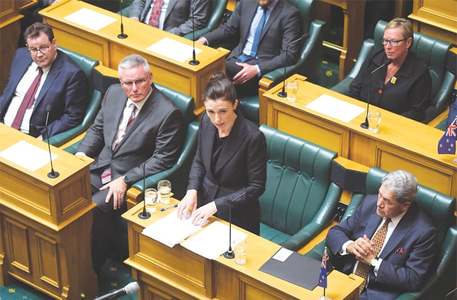
New Zealand Prime Minister Jacinda Ardern announced on Thursday an immediate ban on semi-automatic and automatic weapons like the ones used in the terror attacks on two mosques in Christchurch that killed 50 worshippers.
The man charged in the attack had purchased his weapons legally using a standard firearms license and enhanced their capacity by using 30-round magazines “done easily through a simple online purchase", she said.
“Every semi-automatic weapon used in the terrorist attack on Friday will be banned,” Ardern added.
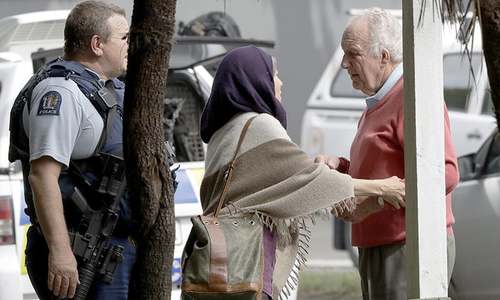
Ardern's announcement comes less than a week after the killings, as more of the dead were being buried. At least six funerals took place on Thursday, including for a teenager, a youth soccer coach and a Muslim convert who loved connecting with other women at the mosque.
Cashmere High School student Sayyad Ahmad Milne, 14, was known as an outgoing boy and the school's futsal goalkeeper. Tariq Rashid Omar, 24, graduated from the same school, played soccer in the summer and was a beloved coach of several youth teams.
In a post on Facebook, Christchurch United Football Club Academy Director Colin Williamson described Omar as “a beautiful human being with a tremendous heart and love for coaching". Linda Armstrong, 64, who converted to Islam in her 50s, was also buried, as were Hussein Mohamed Khalil Moustafa, 70, Matiullah Safi, 55, and Haji Mohammed Daoud Nabi.

Families of those killed had been awaiting word on when they could bury their loved ones. Police Commissioner Mike Bush said authorities have formally identified and released the remains of 21 victims. Islamic tradition calls for bodies to be cleansed and buried as soon as possible.
An Australian white supremacist, Brenton Harrison Tarrant, was run off the road and arrested by police while he was believed to be on his way to a third target. He had livestreamed the attack on Facebook and said in his manifesto he planned to attack three mosques.
Tarrant, 28, is next scheduled to appear in court on April 5. Police have said they are certain Tarrant was the only gunman but are still investigating whether he had support.
Meanwhile, preparations were underway for a massive Friday prayer service to be led by the imam of one of the two New Zealand mosques where worshippers were killed.
Imam Gamal Fouda said he is expecting 3,000 to 4,000 people at the Friday's prayer service, including many who have come from abroad. He expects it will take place in Hagley Park, a city landmark across from Al Noor mosque with members of the Linwood mosque also attending.
Al Noor workers have been trying feverishly to repair the destruction at the mosque, Fouda said.
“They will bury the carpet,” he said. “Because it is full of blood, and it's contaminated.” Fouda said that he expects the mosque to be ready to open again by next week and that some skilled workers had offered their services for free.
“The support we have been getting from New Zealand and the community has been amazing,” he said.
As the investigation continues into the attack, Ardern has also said an inquiry would look into intelligence and security services' failures to detect the risk from the attacker or his plans.
Ardern said on Thursday that the government is working on a large-scale buy-back plan to encourage owners of now-banned weapons to surrender them. She did not say what would happen to those who violate the law.
She also said she and the Cabinet would work through legal exemptions to the ban, such as for farmers needing to cull their herds but said any exemptions would be “tightly regulated".
"For other dealers, sales should essentially now cease. My expectation is that these weapons will now be returned to your suppliers and never enter into the New Zealand market again,” she said.