British PM May asks a wary EU to delay Brexit until June 30


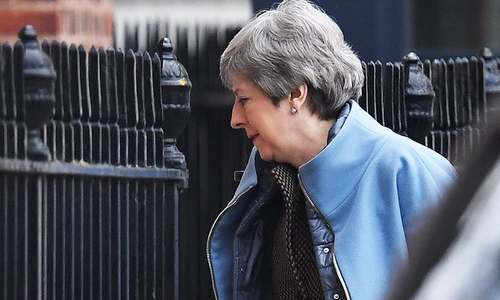
Exactly 1,000 days after Britain voted to leave the European Union, and nine days before it is scheduled to walk out the door, Prime Minister Theresa May hit the pause button on Wednesday, asking the bloc to postpone the UK’s departure until June 30.
EU leaders, who are exasperated by Britain’s Brexit melodrama, said they would only grant the extension if May could win the UK Parliament’s approval for her twice-rejected Brexit deal. Otherwise, the UK is facing a much longer delay to Brexit, or a chaotic “no-deal” departure from the bloc.
Explore: What is Brexit all about?
In a letter to European Council President Donald Tusk, May acknowledged that the Brexit process “clearly will not be completed before 29 March, 2019” — the date fixed in law two years ago for Britain’s departure.
In asking to delay Britain’s withdrawal until June 30, May said she would set out her reasons to EU leaders at a summit in Brussels on Thursday.
Tusk said he thought a short delay to Brexit “will be possible, but it would be conditional on a positive vote on the withdrawal agreement in the House of Commons.”
British opposition politicians, and pro-EU members of May’s Conservative government, had urged a longer extension, saying a delay of just a few months could leave the country once again facing a chaotic no-deal Brexit this summer. Withdrawing without a deal could mean huge disruptions for businesses and U.K. residents, as well as those in the 27 remaining EU countries.
But a long extension would infuriate the pro-Brexit wing of May’s divided party and would require Britain to participate in May 23-26 elections for the European Parliament.
May said a longer delay would result in Parliament spending “endless hours contemplating its navel on Brexit.”
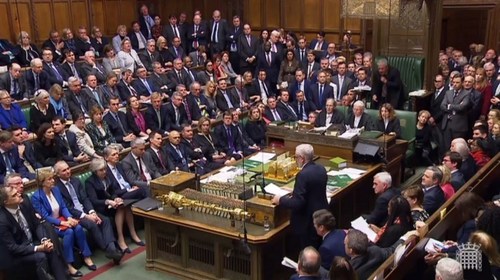
“As prime minister I am not prepared to delay Brexit any further than June 30,” she told the House of Commons — a hint she could quit if Britain is forced to accept a longer pause.
Explore: Will Brexit be delayed? The hows and the whys
Any delay that required Britain to take part in European parliamentary elections would be a major headache for the bloc. Britain’s seats already have been allocated to other countries to fill in the May election.
Britain believes it would not have to participate if it got a three-month delay, because the newly elected European parliament is not due to convene until July.
But a leading European Commission official said a June 30 extension would cause “legal uncertainty.”
The official, who asked not to be identified because of the sensitivity of the situation, said Commission President Jean-Claude Juncker told May in a telephone call that “the withdrawal has to be complete before May 23,” the first day of the European elections.
The alternative would be for Britain to participate in the elections and accept a much longer delay, to the end of 2019 or beyond.
The EU is unwilling to give Britain more time unless the government can find a way out of the Brexit impasse.
German Foreign Minister Heiko Maas said that “if the (EU) Council is to decide on extending the deadline for Britain, then we would like to know: Why, why, why?”
French Foreign Minister Jean-Yves Le Drian said a delay could only be granted if May guaranteed that its purpose “is to finalise the ratification of the deal already negotiated.”
EU leaders are united in saying that the divorce deal it spent more than a year and a half negotiating with Britain can’t be renegotiated.
But the deal has twice been rejected twice by hefty margins in Britain’s Parliament, amid opposition from pro-Brexit and pro-EU lawmakers.
May had planned to try again this week to get the agreement approved, until the speaker of the House of Commons ruled that she can’t ask Parliament to vote on the deal again unless it is substantially changed.
May told Tusk that despite the ruling “it remains my intention to bring the deal back to the House.”
Both sides of Britain’s Brexit divide were equally unimpressed with May’s request for a delay.
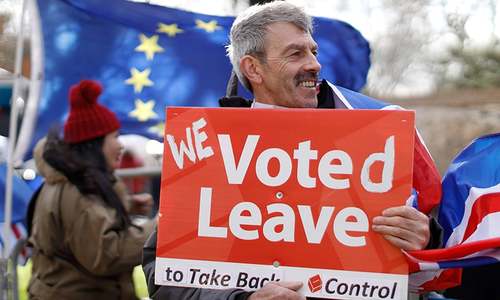
Brexit-backing Conservative lawmaker Peter Bone said delaying Brexit would be “betraying the British people.”
Take a look: Consequences for EU and Britain of a Brexit
Opposition Labour Party lawmaker Angela Eagle said May should “stop banging her head against the brick wall of her defeated deal” and seek cross-party support for a new Brexit strategy.
The Brexit-fueled political chaos has drawn reactions ranging from sympathy to scorn at home and around the world. On its front page Wednesday, the Brexit-backing Daily Mail newspaper bemoaned the time since the referendum as”1,000 lost days.”
From Washington, Donald Trump Jr. said May should have listened to his father, who urged her last year to sue the EU in order to secure better departure terms. The U.S. president has criticized May for not taking his advice.
The president’s multimillionaire son blamed “elites” in London and Brussels for scuttling Brexit. Writing in the Daily Telegraph, Trump Jr. said “democracy in the U.K. is all but dead.”
EU leaders are unlikely to agree to give final approval for a delay until Parliament has voted again on May’s deal, probably next week.
Tusk said he didn’t foresee having to call an emergency summit next week to approve the extension, which could be done in writing.
“Even if the hope for a final success may seem frail, even illusory, and although Brexit fatigue is increasingly visible and justified, we cannot give up seeking until the very last moment a positive solution,” Tusk said in Brussels.
Juncker said Britain’s Parliament needed to decide whether it would approve the only deal that is on the table.
“If that doesn’t happen, and if Great Britain does not leave at the end of March, then we are, I am sorry to say, in the hands of God,” he said. “And I think even God sometimes reaches a limit to his patience.”