Don’t leave children of foreign fighters in legal limbo, UN urges states


 0
0


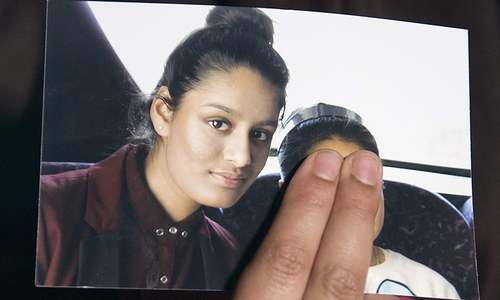
LONDON: Children of foreign fighters must have the right to belong to a country, lawyers and the United Nations said on Wednesday, after Britain stripped the citizenship of a teenage mother who travelled to Syria at 15 to join IS.
The fate of Shamima Begum, who was found in a refugee camp in Syria last week, has illustrated the ethical, legal and security conundrum that governments face when dealing with the families of militants who swore to destroy the West.
With IS depleted and Kurdish-led militia poised to seize the group’s last holdout in eastern Syria, Western capitals are trying to work out what to do with battle-hardened foreign jihadist fighters and their wives and children.
The UN children’s agency, Unicef, said all children have “the right to a name, an identity and a nationality” according to international laws and governments had a responsibility to adopt safeguards that prevent a child from being born stateless.
“But where this occurs, those children need legal-aid and support to ensure no child is denied their right to citizenship,” Unicef said in an email.
There is no reliable estimate for the number of stateless people globally although the UN estimates it could be 12 million and wants to end statelessness by 2024 as it can leave people with no access to basic rights like education and health.
Amal de Chickera, co-director of the Institute on Statelessness and Inclusion, said Britain should have taken Begum and her child and put her under investigation as it had an obligation to look after the baby and children in similar cases. “It’s deeply concerning to see this happening to a baby that’s just a few days old,” he said in a phone interview.
“One must question the effectiveness of this measure: does citizenship-stripping really strengthen or protect national security? Or can it potentially lead to further radicalisation?”—Thomson Reuters Foundation
Published in Dawn, February 21st, 2019