‘US has broken taboo of not talking to Taliban’


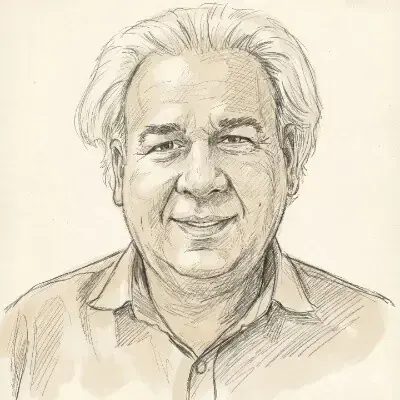
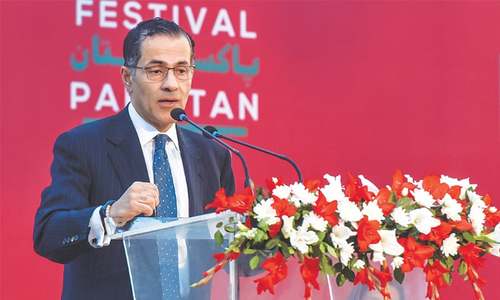
KARACHI: The second day of the inaugural Adab Festival Pakistan began with a thought-provoking conversation between internationally renowned scholar Vali Nasr and Salim Raza. The latter put some serious questions to Mr Nasr about situations in Afghanistan and Syria and the economic effect caused by political goings-on in the region.
Mr Nasr said the most important thing right now about talks on Afghanistan is the breaking of the taboo. For a long time the US did not want to talk with the Taliban. This is significant that the US has broken the taboo — now the talks are on the table. It could happen again. This is a process, and the first stage is whether both can achieve a ceasefire.
Mr Nasr said people talk about the Afghan government. Reality is the Afghan government doesn’t have the capacity to fight the Taliban. So whatever façade we want to put on this, at the end of this day it’s about the US and the Taliban. The Taliban want the US to leave and want a much bigger control, if not total, over Afghanistan. The US over time has been wanting less and less to do in the region. So there’s a bare minimum what the US wants. It went into Afghanistan in the first place to combat international terrorism, to clean out Al Qaeda and punish the Taliban because they wouldn’t hand over Osama bin Laden to the US. Therefore, the bare minimum is that the US wants guarantee that once it leaves [Afghanistan] there is no repetition of the previous situation.
Americans now want less to do in region, says scholar Vali Nasr at Adab Festival
Mr Nasr said negotiations are not surrender treaties. The US and the Taliban won’t get what all they want. The Afghan government is not a factor because it doesn’t bring any power to the table. The real negotiations are going to happen between the Taliban and what we used to call the Northern Alliance — power brokers of Hazaras, Tajiks and Uzbeks in the north. They have to come to some kind of a power-sharing deal. Then there is the question of what happens after the US leaves. There has to be some kind of military force on the ground to keep these people apart from each other, which probably will be a UN force. The Taliban won’t see a sizeable US force as a mutual guarantee of the deal. This story has just begun. There are some positive signs: the taboo is broken, Pakistan and the US are on the same side, and Iran, Russia and China will also like the US to leave.
Mr Nasr, on the issue of women and minorities in Afghanistan in a post-deal scenario, said it’s a question related to whether the Taliban have learned anything from the past. We are focused on elite conversation, but we forget that nowadays there is a sizable Afghanistan that is young and on smart-phones. Will the final deal leave a place for them? There are models such as Beirut that have worked. If a final deal does not provide a place for Afghan society that has emerged in Kabul, he [Nasr] sees them — the educated, liberal, nascent middle class — leaving Afghanistan. Preserving their space is important. Though that may not feature in high talks, it is a matter of concern.
With respect to Syria, Mr Nasr said Bashar Al Asad is not going to go. The idea that there will be a succession is not on the cards. If the war was about removing him, that’s not going to happen. He’s won the war. It’s not going to be easy to integrate Syria back into the international community. Some Arab countries [Tunisia and Egypt] want them back. It’s not easy because Asad is a war criminal. Secondly, Asad doesn’t control the entire country. There’s a sense that it’s better for Asad to control all over Syria because no one wants a Sunni land. The area close to Turkish border is under the control of Al Nusra, an offshoot of Al Qaeda. Iran, Russia and Hezbollah will not accept that. But to remove those fighters could lead to a humanitarian situation.
Mr Nasr said on the Kurdish side, Turkey will not accept anti-Turkish militia on its border. That also poses a threat of humanitarian nature. There is no consensus in the region to support the Kurds.
On the subject of economy in the region vis-à-vis China, Mr Nasr said the Chinese are interested in ways Europeans are trying find ways around sanctions on Iran. There is very little chance of the US losing its economic power. China’s main impact on the region is psychological. There are some things to be observed about China. For example, China is out to make money. It’s not interested in playing geostrategic games. It wants to do trade with Saudi Arabia and Iran, but doesn’t want to even help bridge the gap between them. Similarly, it doesn’t want to get between India and Pakistan. It will tell Narendra Modi what he wants to hear, it will tell you [Pakistan] what you want to hear. It wants to maximise trade with India and Pakistan.
Published in Dawn, February 3rd, 2019