Afghanistan postpones presidential election


 3
3


Afghanistan's presidential election, initially scheduled for April, will be postponed for several months to allow time to fix technical problems that surfaced during October's parliamentary elections, officials said Wednesday.
More time is needed to verify voter lists and train staff on a biometric identification system designed to reduce fraud, said Abdul Aziz Ibrahimi, deputy spokesman for the Independent Election Commission.
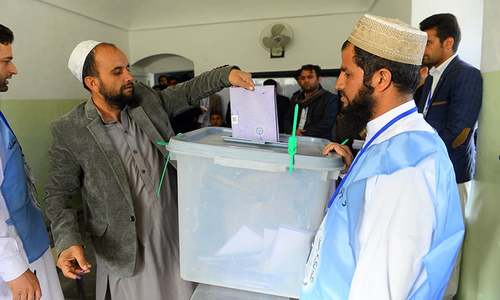
Parliamentary elections were fraught with delays after the few staff trained on the biometric system did not show up at the polling booths and countless registered voters could not find their names on voter lists.
Polling had to continue for a second day after hundreds of polling stations opened several hours late. Several legal complaints have been filed to challenge the results.
No new date for the presidential election has yet been set.
The last presidential election, held in 2014, was mired in controversy and widespread allegations of fraud.
The two leading candidates, Ashraf Ghani and Abdullah Abdullah, fought a tight race that went to a second vote. But before the results of the runoff could be announced, Abdullah alleged massive vote fraud and warned of widespread protests.
John Kerry, the then US secretary of state, interceded and helped cobble together a unity government and convinced the election commission to hold off on announcing the results of the runoff, which Ghani seemed poised to win.
Ghani was named president and Abdullah was given a newly created title of Chief Executive. The arrangement was intended to last only two years but has continued up to the present, resulting in a government marked by deep divisions that has struggled to combat a resurgent Taliban.
The postponement of the election could give more time for US efforts to end the 17-year war. US peace envoy Zalmay Khalilzad has crisscrossed the region several times since his appointment in September, reportedly meeting with the Taliban on several occasions.
Khalilzad has said he would like to see the Taliban and the Afghan government devise a “roadmap” before the April vote. Both sides have said that was an unrealistic deadline.