0
0

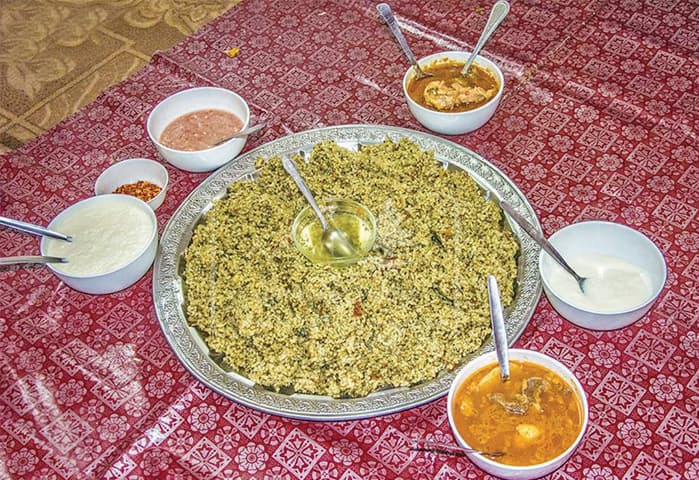
PESHAWAR: Known by different names of Shney Wrejay, Chukanr, Saagenai and Warjalay, the traditional rice food in Swat and other hilly areas is enjoyed by all and sundry. Warjalay as commonly known is a local version of vegetable rice which is served with yogurt, cheese, milk or its fresh cream and sometime with the sauce of chicken meat.
According to local residents, the real meaning of ‘Warjalay’ is untraceable, but the dish seemed to be the oldest in the area. “Its various names show the cuisine is the oldest among all the rice dishes in the area. It is equally enjoyed and served to guests on propitious occasions,” said Shazia Sarwat, a student of Home Economics Department at the University of Peshawar.
“There are hundreds of rice dishes throughout the world, but for me the homemade Warjalay of Swat is matchless when it comes to taste, smell and its simple cooking method as it is not only a side dish, but also served to guests and friends as main traditional delight,” said Wajid Ali, a resident of Swat.
Swat is home to different versions of rice cuisines and traditional foods. Warjalay is a favourite dish especially among residents of hilly areas known for arousing craving for food. Tariq Afghan, a young foodie sharing his experience, said that leaves of Shautal, a kind of green leafy vegetable mostly grown in Dir, Swat, Malakand, Buner and parts of Khyber Pakhtunkhwa, were mixed with boiled rice and then enjoyed with fresh milk cream.
Bismeen Bibi, 55, a housewife from Swat in Peshawar told this scribe that among many varieties of rice dishes, Warjalay was the favourite traditional food flavoured with Saag – any green leafy vegetable like spinach, garlic, onion, mustard and sprinkled with cumin for lending it extra taste. “Housewives are experts at cooking of rice dishes in and around Swat valley,” she stated.
Sanam Jan, a food expert in Peshawar, said that among traditional delights Warjalay was relished by people in March and April because of the easy availability of green vegetables in the area.
The recipe, she said, was quite simple – rice, leaves of green vegetable, cumin seeds and lemon. “A small bowl full of desi ghee is placed in the middle of cooked rice stuff for dipping a morsel of rice in it. The foodies gather around it and enjoy a collective bite of Warjalay. It lends an additional taste to the traditional cuisine,” Ms Jan said.
Sultan Bibi, 60, a resident of Batkhela, said that mostly women had a master hand in cooking the traditional dishes. She said that Warjalay was not strictly a seasonal food. She said that leaves of green vegetables were dried up and then mixed in the rice in ground form when fresh leaves got scant in the area. “However, Warjalay tastes delicious when fresh leaves are mixed in it,” she said.
Published in Dawn, December 22nd, 2018