0
0
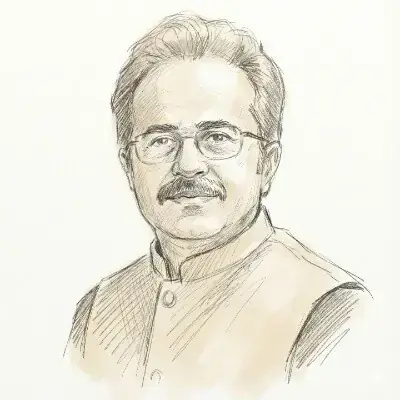
ISLAMABAD: Former chief justice of Pakistan (CJP) retired Justice Jawwad S. Khawaja on Wednesday said in Pakistan a case attains finality in 25 to 50 years on an average.
Addressing the launching ceremony of a think tank, Jinnah Centre for the Rule of Law in Islamabad, Justice Khawaja admitted that in Pakistan, administration of justice was neither speedy nor inexpensive.
After going through civil court and the Supreme Court, some time a case takes 25 years to attain finality and in some instances more than five decades, he said.
The elite and the rulers think that the country was established for the privileged people, therefore, they apply selective law and constitutional provisions while ignore others, he added.
He went on to say that everyone deems himself all wise and due to this mindset, people were getting fed up with the system.
Regarding quality of judgments, the former CJP said that there were about 2,400 judges of the superior judiciary and lower courts and one could ascertain their command over law by reading the decision of 100 of them only.
He said the rule of law was equally applicable on the common citizen as well as on the chief justice of Pakistan or head of any state institution.
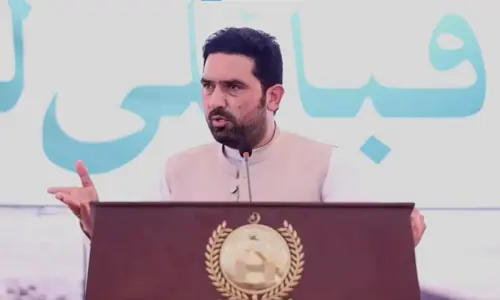
Prime Minister’s Special Assistant on Accountability Mirza Shahzad Akbar said that without free and independent media, there was no concept of accountability.
He further said that governments did not realise the importance of speedy and inexpensive justice, adding that the finance ministry never played the desired role to equip the judiciary with the required facilities. He lamented over lack of research in the field of law.
Speaking on the occasion, former Senate chairman Raza Rabbani said the country had never seen the rule of law.
He said the country had always remained under the rule of individuals.
He added: “Every military dictator imposed laws of their choice to suppress the resistance movement in the country.”
He recalled that military dictator Ziaul Haq had imposed a ban on student unions, weakened trade unions and eliminated the culture of coffee houses.
The former Senate chairman said the ruling elite had never considered people of Pakistan as part of the state.
He suggested that state institutions, executive, judiciary and the parliament should enter into an agreement that in future the constitution of 1973 would be implemented in letter and spirit at all cost.
Published in Dawn, December 6th, 2018