6.4-magnitude earthquake hits western Iran: Iran institute


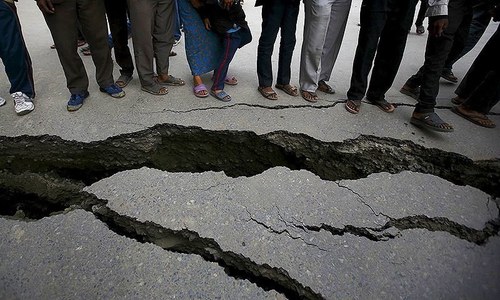
A strong 6.4-magnitude earthquake hit Iran's western province of Kermanshah late Sunday, Iran's institute of geophysics said.
The epicentre of the quake was 17 kilometres southwest of the city of Sarpol-e Zahab, according to the institute, which said it struck at a depth of 7 kilometres.
At least 115 were injured in Sarpol-e Zahab and the neighbouring Gilan-e Gharb city where the quake was also felt, Kermanshah governor Houshang Bazvand told Fars news agency.
The region was rocked by seven weaker aftershocks an hour after the initial tremor, the strongest of which was magnitude 5.2, the geophysics institute said.
There were also reports that the quake was felt across the border in Iraq.
Morteza Salimi, an official with the red crescent society of Iran, told semi-official news agency ISNA that the quake rocked areas “just reconstructed” after a major tremor last year.
Kermanshah was hit by a devastating 7.3-magnitude quake last November which killed 620 people, mostly in Sarpol-e Zahab.
It left more than 12,000 people injured and damaged some 30,000 houses, with huge numbers made homeless at the start of the cold season in the mountainous region.
Local officials said the estimated cost of reconstruction would be measured in billions of dollars, at a time when Iran was struggling to cope with a tanking economy.
The western province was also hit by a 6.0-magnitude quake in August that killed two people and injured more than 250.
Iran sits on top of two major tectonic plates and sees frequent seismic activity.
The country's deadliest quake was in 1990, a 7.4-magnitude earthquake in northern Iran that killed 40,000 people, injured 300,000 and left half a million homeless, reducing dozens of towns and nearly 2,000 villages to rubble.