CIA concludes Saudi Crown Prince behind Khashoggi murder: reports

The United States Central Intelligence Agency (CIA) has concluded Saudi's powerful Crown Prince Mohammed bin Salman was behind the killing of journalist Jamal Khashoggi, US media reported on Friday, citing people close to the matter.
The US assessment directly contradicts the conclusions of a Saudi prosecutor one day prior, which exonerated the prince of involvement in the brutal murder.
But The Washington Post, which broke the story, said the CIA found that 15 Saudi agents flew on government aircraft to Istanbul and assassinated Khashoggi in the Saudi consulate.
Queried by AFP, the CIA declined to comment.
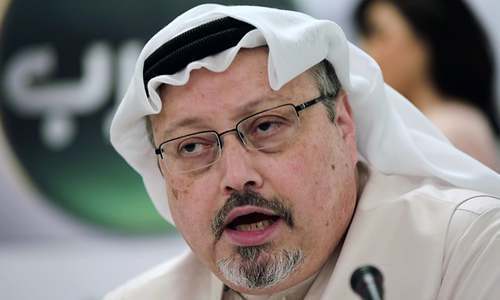
Khashoggi, a Post columnist, had gone to the consulate to obtain documents necessary to marry his Turkish fiancee.
Saudi Arabia — which quickly dismissed the reported CIA findings — has repeatedly changed its official narrative of the October 2 murder, first denying any knowledge of Khashoggi's whereabouts and later saying he was killed when an argument degenerated into a fistfight.
In the latest version presented by the Saudi prosecutor on Thursday, a 15-member squad was formed to bring Khashoggi back from Istanbul "by means of persuasion" — but instead ended up killing the journalist and dismembering his body in a "rogue" operation.
The CIA scrubbed multiple intelligence sources, the Post said, among them a phone call between the prince's brother — the Saudi ambassador to the United States — and Khashoggi.
The ambassador reportedly told the late journalist that he would be safe to go to the consulate in Istanbul and get the papers he needed.
'Some things you can't do'
But a Saudi embassy spokesperson said that Ambassador Khalid bin Salman had never discussed "anything related to going to Turkey" with Khashoggi.
"Amb Prince Khalid bin Salman has never had any phone conversations with (Khashoggi)," the statement posted on the ambassador's Twitter account said.
"The claims in this purported assessment is false," it said.
Meanwhile, the US intelligence agency also said in determining the crown prince's role it considered him a "de facto ruler" in Saudi Arabia: "The accepted position is that there is no way this happened without him being aware or involved," the Post quoted an official as saying.
That official dubbed Prince Mohammed a "good technocrat" — but also someone unpredictable who "goes from zero to 60, doesn't seem to understand that there are some things you can't do".
The New York Times later reported that the CIA findings were also based on calls from the kill team to one of the crown prince's senior aides.
But the paper said that while the intercepts showed Prince Mohammed was working to lure Khashoggi to Saudi Arabia, the crown prince had not said in the calls that he wanted Khashoggi killed.
The NYT cited officials as saying US and Turkish intelligence as of yet has not found direct evidence connecting the prince to Khashoggi's killing.
The CIA conclusions nevertheless threaten to further fray relations between Washington and key ally Riyadh, which has sought to end discussion of the murder and rejected calls for an international investigation.
On Thursday, the US Treasury slapped sanctions on 17 people, including close aides of Prince Mohammed, suggesting a coordinated effort between Riyadh and Washington to pre-empt the threat of harsher actions from an outraged US Congress.
US President Donald Trump has shied from directly blaming the Crown Prince but on Friday agreed with Turkish President Recep Tayyip Erdogan that "any cover up of the incident should not be allowed".