WHEN the move was announced earlier this year, it appeared that the state was beginning to take seriously the fight against militant and extremists groups that had until then largely avoided scrutiny and sanctions.
Unhappily, that now seems to have been little more than a familiar last-minute effort to temporarily avoid international scrutiny and censure.
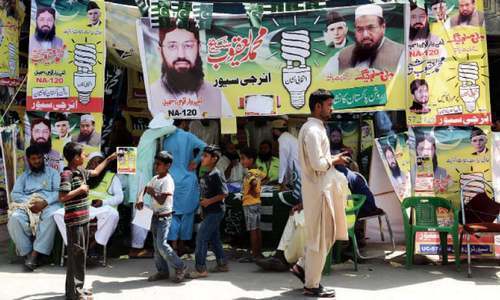
The Jamaatud Dawa and Falah-i-Insaniyat Foundation, offshoots of and widely perceived to be fronts for the banned Lashkar-i-Taiba, were outlawed in Pakistan in February via a presidential ordinance amending the Anti Terrorism Act, 1997. Even though the presidential ordinance was suddenly moved ahead of what turned out to be a fateful Financial Action Task Force meeting in Paris, it was a sound decision to ban groups active in Pakistan that have been blacklisted by a UN Security Council committee on sanctions against terrorist groups.
Aligning Pakistan’s domestic policies with its international obligations is a welcome and necessary step.
Yet, presidential ordinances have been constitutionally curtailed, and as soon as the ordinance to amend the ATA was passed, a 120-day expiration countdown began.
In April, it was reported that the federal government was considering placing a bill before parliament to replace the presidential ordinance. But parliament’s term ended in May; a caretaker government was in place till August; and now lawyers for Hafiz Saeed have told the Islamabad High Court where they are challenging the JuD and FiF bans that the presidential ordinance has lapsed.
Staggeringly, this has happened as a FATF team has visited Pakistan as part of a year-long compliance assessment and determined that Pakistan’s overall progress has been unsatisfactory when it comes to removing this country from the FATF grey list.
Nacta, which maintains and regularly updates a list of banned groups in the country, no longer has either the JuD nor the FiF listed as a proscribed group on its website.
While the JuD and FiF, and all groups that face state sanction and closure, are entitled to and must receive due process, the legal process should not be reduced to a farce.
If in February an assessment was made that Pakistan should expand the list of banned groups to include groups that have been banned by the UNSC sanctions committee, what has changed between then and now to justify a reversal of that decision?
The opaque and, at times, irrational decision-making that has characterised Pakistan’s fumbling attempts at rolling back some militant groups and extremist networks not only harm the country’s international standing but will make it more difficult to eventually win the fight against all forms of terrorism, militancy and extremism.
Prime Minister Imran Khan has pledged to reinvigorate and purposefully implement the National Action Plan. The military leadership has consistently maintained that there is no space for terrorism, militancy and extremism of any stripe inside Pakistan.
The national leadership must deliver on its promises.
Published in Dawn, October 27th, 2018
Download the new Dawn mobile app here: