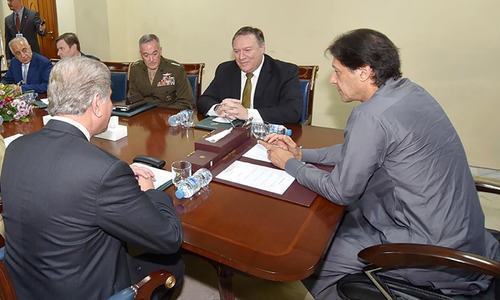
A PUBLICLY acknowledged meeting between a US envoy and the Afghan Taliban is perhaps another sign that the US is, at long last, willing to acknowledge the political and military reality in Afghanistan.
Zalmay Khalilzad, a hawkish diplomat appointed as the US special representative for Afghanistan reconciliation last month, has met with six Afghan Taliban leaders in Qatar, raising hopes that a meaningful peace and reconciliation process may be underway in Afghanistan.
While cautious optimism may be called for this time — and it is to be hoped the days and weeks ahead will bring more positive news — the long history of false starts and broken promises in Afghanistan should not be forgotten.
A clear-eyed but purposeful approach is called for by all sides.
Failure at this stage could throw Afghanistan and the region into fresh turmoil at a time when the global order is facing unprecedented stresses.
It is not clear what approach Mr Khalilzad is taking in his attempts to reinvigorate a stalled peace process in Afghanistan.
The US diplomat’s reputation as a hawk, particularly his near-incendiary views on Pakistan’s role in the region, did not bode well for regional peace efforts when his latest appointment was announced last month.
Yet, if Mr Khalilzad proves to be a hard but pragmatic negotiator, he may be able to help break a negotiating stalemate in Afghanistan.
An Afghan-led, Afghan-owned peace process is desired by all sides, but the reality of the US’s military, political and financial role in Afghanistan has long meant that a peace with the Taliban would entail difficult decisions on a future role of the US in the country.
If Mr Khalilzad has the full backing of President Donald Trump, he could thread the needle between the Taliban’s demands for a complete withdrawal of US forces and the Afghan government’s and, likely, the US’s demand for a future political set-up in Afghanistan that is acceptable to them.
It is possible that the Taliban themselves are recognising that a potential window for a peace deal, backed by regional and international powers, may be closing.
The US, China, Russia, Pakistan, India, Iran, Saudi Arabia and Turkey, among other countries with stakes or a role in Afghanistan, are themselves being drawn into complicated bilateral and multilateral struggles that could affect their ability to cooperate and coordinate on Afghanistan.
For Pakistan, the challenge remains the same: helping achieve peace and stability in Afghanistan while better managing strained ties with the US.
A steady approach and common-sense diplomacy are needed.
Published in Dawn, October 15th, 2018